Meta description: Ease into the new homeschool year with back-to-school games, back-to-school ideas for homeschoolers, creative back-to-school activities, and even fun back-to-school shopping inspired by tabletop RPGs. Help your kids transition from summer freedom into structured learning without losing the adventure.
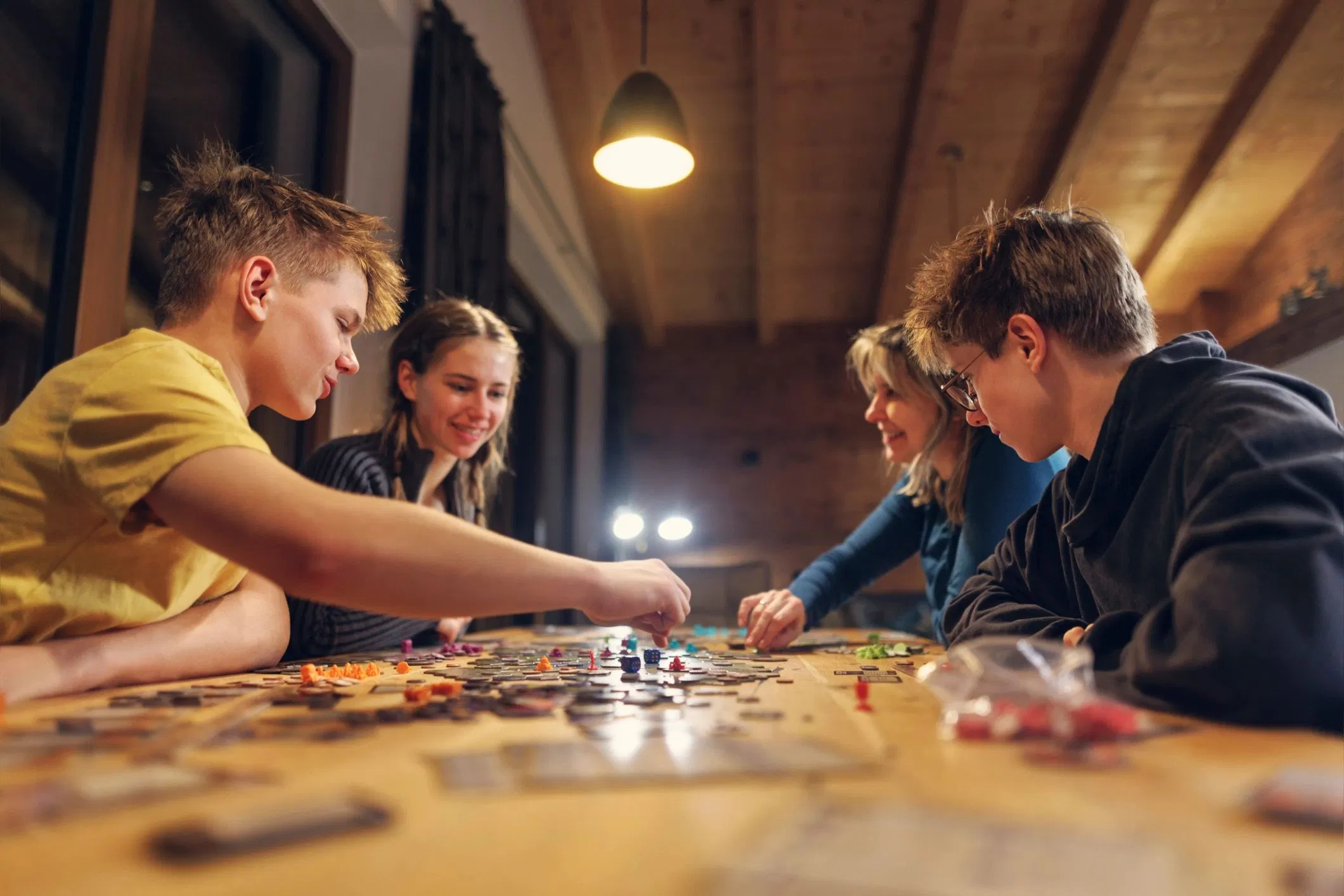
Image note: Keep the existing hero image for now, but ideally swap it for a more back-to-school scene: a family gathered with new notebooks, pencils, and polyhedral dice around the table to signal a fresh start to the homeschool year.
If you are standing in that bittersweet space between summer freedom and the first day of your new homeschool rhythm, you are not alone. One part of you is ready for structure, steady routines, and purposeful learning. Another part wants to hold onto the sunshine, the slower mornings, and the family connection that made summer feel alive. That transition can feel surprisingly tender. You want to start strong, but you do not want school to arrive like a slammed door.
Take a deep breath. You do not have to choose between summer magic and meaningful learning. You can bridge them.
That is where tabletop role-playing games shine. They give you a screen-light, hands-on way to ease back into routines while keeping wonder at the center of your days. Instead of jumping straight from freeform summer fun into rigid schoolwork, you can use tabletop play as the adventure path between the two. Your children keep creating, laughing, building, and connecting, while quietly sharpening skills in math, language, planning, problem-solving, and collaboration.
When you introduce back-to-school games and back-to-school activities that feel playful instead of pressured, you lower resistance and breathe life into the first weeks of school. Whether you are searching for back-to-school ideas for homeschoolers, fresh rituals for your family, or a more imaginative approach to back-to-school shopping, tabletop learning helps your year begin with momentum instead of meltdowns.
Here are 7 back-to-school games and activities that help you start the year with confidence while keeping the adventure alive.
1. Back-to-School Worldbuilding (Writing & Geography)
Instead of beginning the year with dry introductions and stiff expectations, invite your children to create the fantasy world they will explore all school year long. Think of this as your homeschool session zero: the moment when you set the tone, imagine the journey ahead, and turn the blank page of a new year into a living map.
- Why it works: Worldbuilding is geography, geometry, creative writing, and future-planning woven into one welcoming activity. As your children chart rivers, name villages, and sketch mountain passes, they practice spatial reasoning, scale, descriptive language, and big-picture thinking without the pressure of formal assignments.
- How to implement it: Sit down together with a thick roll of paper, pencils, markers, and watercolors. Ask questions that point toward the year ahead: What region will we explore first? Where does the Library of Lost Knowledge stand? What village teaches brave young heroes their first skills? You are not just making a map. You are building a shared vision for the school year. For structured guidance on integrating storytelling into daily learning, explore our gamifying education with RPGs guide.

2. Cooperative Dice-Pool Math Warm-Ups (Arithmetic & Probability)
When summer has loosened your family’s academic muscles, math can feel like trying to sprint before you have even stretched. A no-pressure dice game changes the energy completely. Instead of announcing, “It’s time to get serious about math again,” you invite your children into a quick quest where numbers become tools for teamwork.
- Why it works: This is a gentle, low-resistance way to ease back into math after a break. Abstract concepts become tangible when children physically hold, group, and add dice to overcome challenges. It sharpens addition fluency, mental flexibility, and an intuitive grasp of probability while keeping the emotional stakes light.
- How to implement it: Give each player a pool of d6 or d12 dice and frame it as a first-weeks-of-school math warm-up. Present a scenario like, “The stone bridge opens only if the party can roll an exact total of 15 before sunset.” Let your children test combinations, compare strategies, and celebrate progress. Short, playful sessions build confidence fast.
3. Improvisational Story Circles (Oral Language Warm-Ups for the School Year)
Before your children are ready to leap into written narrations, book reports, or formal language arts work, they often need to rediscover the rhythm of speaking, listening, and building ideas out loud. Story circles make that transition feel natural. They are like vocal stretches before a long, beautiful performance.
- Why it works: Oral language skills flourish in safe, playful environments. Children practice listening closely, building on others’ ideas, organizing thoughts, expressing emotion, and speaking with growing confidence. This creates a strong bridge back into storytelling, narration, and discussion-based homeschool learning.
- How to implement it: Gather in the living room or around the table and pass a special token: a polished stone, small figure, or wooden marker. Whoever holds it adds one sentence to the shared adventure. Start with a prompt like, “On the first day of the new school year, the heroes discovered a locked gate in the Valley of Whispers…” Let the story wander, deepen, and surprise you. If you want to dive deeper into nurturing creativity and emotional intelligence, check out our insights on fostering creativity through RPGs.

4. Back-to-School Craft Day (Fine Motor Skills & Spatial Reasoning)
Back-to-school shopping does not have to mean only filling a cart. Sometimes the most meaningful supplies are the ones you make together. Turn one afternoon into a creative launch party where your children craft new character tokens, bookmarks, initiative trackers, or even a homemade dice tray for the year ahead.
- Why it works: Fine motor control, hand-eye coordination, patience, and spatial reasoning all grow through hands-on making. More importantly, this kind of craft day gives your children ownership over the tools they will use all year. That ownership matters. Children are more invested in routines when they help build them.
- How to implement it: Pull out cardboard, felt, scrap fabric, clay, paints, and recycled boxes. Spread butcher paper over the table and frame the day as Back-to-School Craft Day. Instead of buying every extra accessory, make a few together. A painted pencil box can become a treasure chest. A shallow lid can become a dice tray. A paper token can become a hero ready for the first quest.
5. Character Sheet Budgeting & Back-to-School Shopping (Math & Financial Literacy)
Back-to-school shopping is already a budgeting exercise, so why not turn it into a story your children can step inside? Give your young adventurers a pouch of fictional gold and a school-supply-inspired gear list. Suddenly, planning for the year becomes a challenge to solve instead of a chore to endure.
- Why it works: Financial literacy lands more deeply when children can connect pretend decisions to real-life ones. They practice addition, subtraction, prioritization, comparison, and opportunity cost while seeing how budgeting works in your family’s everyday world.
- How to implement it: Create a merchant list that mirrors real supply planning. Maybe a sturdy journal equals an adventurer’s logbook, pencils become graphite wands, and a backpack becomes a travel pack. Give your children a firm budget and ask questions like, Do you spend more gold on deluxe gear now, or save coins for future quests? This simple bridge helps children understand back-to-school shopping through imaginative play.

6. Card-Driven Mystery Detective Stories (Critical Thinking & Reading Comprehension)
Before you dive back into textbook pages and workbook questions, give your children a mystery to solve. This kind of family investigation wakes up the critical-thinking muscles that summer may have let rest. It gets their minds moving again, but in a way that feels like discovery rather than demand.
- Why it works: Reading comprehension transforms from a chore into a mission. Children scan texts for clues, compare evidence, test ideas, and defend conclusions. In other words, they re-enter critical thinking mode before formal academics ask for sustained focus.
- How to implement it: Lay out illustrated clue cards, eyewitness statements, and riddles across the table or around the room. Invite your children to become investigators who must solve a village mystery before lunch. Encourage them to keep notes in a detective journal. They will be practicing handwriting, analysis, and evidence-based reasoning while having a genuinely good time.
7. Family Campaign Nights as Your Weekly Meeting Game (Holistic Connection & Collaborative Leadership)
If you want one ritual that keeps summer connection alive after the school year begins, make it this one. A weekly family campaign night can become your family meeting game: a dependable anchor that gathers everyone around the table, reconnects your hearts, and reminds your children that home learning is still a shared adventure.
- Why it works: This is the ultimate synthesis of tabletop games for kids and meaningful homeschool connection. It weaves reading, writing, math, problem-solving, leadership, and emotional regulation into one ongoing story. More than that, it protects your family culture. In the middle of schedules and checklists, it says, we still belong to each other.
- How to implement it: Start small with beginner-friendly rules and short adventures. You can even begin each week with a quick check-in before the game starts: What challenge are we facing this week? What are we excited about? Then carry that energy into play. Step into the role of guide, learn alongside your children, and watch them grow into thoughtful, courageous collaborators.
Back-to-School Shopping: The RPG Way
If you are already making a shopping list for the new homeschool year, this is your chance to make it feel like an invitation instead of an obligation. A few simple tabletop-inspired supplies can transform ordinary school prep into something your children actually look forward to.
Here are a few fun ways to approach back-to-school shopping with an RPG twist:
- Build an adventurer's kit instead of a generic supply pile.
- Let each child choose one special item that feels like part of their character for the year.
- Use school supplies as storytelling tools so they become part of daily learning, not just objects in a bin.
- Keep it simple. You do not need a huge budget or a shelf full of gear.
Try adding a few of these to your list:
- Polyhedral dice for math warm-ups, probability games, and storytelling prompts
- A sturdy notebook or journal as an adventurer’s log, detective notebook, or campaign diary
- Pencils and colored pencils for maps, character sketches, clues, and narration
- Index cards for spell cards, vocabulary prompts, mystery clues, or quick writing challenges
- A small pouch or pencil case to hold dice and other tabletop tools
- Craft basics like glue, cardboard, markers, and paint for making tokens, trackers, or dice trays
If you want to make shopping even more engaging, try this simple challenge:
- Give each child a pretend gold budget.
- Assign supply costs to items on your real or pretend list.
- Ask them to prioritize what belongs in their adventurer’s kit.
- Compare their choices with your real family budget and talk through the difference.
This is the need-to-know piece: when children help make decisions, they understand the purpose behind supplies, and resistance often drops. You are not just buying pencils. You are equipping explorers.
As the year begins, you can also connect with the wider tabletop-in-education community through Tabletop EDU. Their Fellowship Friday talk show is a great way to hear ideas and encouragement from others using tabletop play in education, and their Adventures in the Stacks resource can spark even more imaginative learning as you shape your homeschool plans for the year.

Frequently Asked Questions About Back-to-School Tabletop Learning
How do I balance fun RPG activities with getting back to serious schoolwork?
Think of tabletop play as the bridge, not the distraction. In the first weeks back, your children often need a gentle on-ramp to rebuild stamina, attention, and emotional readiness. Back-to-school activities like these help them transition into academic habits without the friction that can come from jumping straight into heavy work. Start with short sessions, tie them to clear learning goals, and let them support, not replace, your larger homeschool plan.
My kids are resistant to ending summer — will this help?
Yes, often because it honors what they are really grieving. Your children may not be resisting learning itself; they may be resisting the sudden loss of freedom, connection, and play. Tabletop activities keep those life-giving elements in the picture while gently reintroducing structure. Instead of feeling like summer vanished overnight, your family gets to carry its warmth forward into the school year.
Can I really count RPG time as school hours?
In many homeschool settings, yes, especially when the activity clearly develops skills like math, reading, writing, geography, public speaking, logic, collaboration, or financial literacy. You know your local requirements best, but tabletop play can absolutely be part of an evidence-informed educational plan. Keep simple notes on what skills you worked on, and you may be surprised by how much rich learning fits inside one family game session.
Start the School Year Strong Without Losing the Wonder
You do not have to choose between structure and joy as your homeschool year begins. You can build a rhythm that helps your children thrive academically while still protecting the connection, imagination, and screen-light adventure that made summer feel so rich.
Start with one small ritual. Clear the table. Gather the notebooks, the pencils, the dice, and the people you love. Then let this new year begin with curiosity instead of pressure.
When you are ready for more support, visit our start here page and explore our free resources. TableTopTeaching is here to help you start the school year strong with practical, evidence-informed tools that bring learning to life.
Share your back-to-school adventure with us! What game, ritual, or tabletop tradition are you trying first? Leave a comment and join the conversation. Your family’s next chapter can start today.
Leave a Reply