You've done it. You've officially withdrawn your child from traditional school, and now you're staring at a completely blank calendar with equal parts excitement and sheer panic.
Welcome to the first morning of your Texas homeschooling journey. Your kid is still in pajamas at 10 a.m., you've got seventeen browser tabs open about different curriculum options, and you're wondering if you've just made a spectacular mistake. That knot in your stomach? That's completely normal. That voice asking "what do I actually do on Monday morning?" is the question every single new homeschool family asks.
Here's what nobody tells you upfront: the first 30 days aren't about getting it perfect. They're about discovering what "school" actually means for your specific family when you strip away the institutional framework. This guide will walk you through those crucial first weeks, not with a rigid blueprint, but with a realistic roadmap that honors both Texas's minimal legal requirements and your family's actual capacity.
The Paperwork Phase: Days 1–3
Before you can find your rhythm, you need to handle the administrative essentials. In Texas, this is refreshingly straightforward compared to many states.
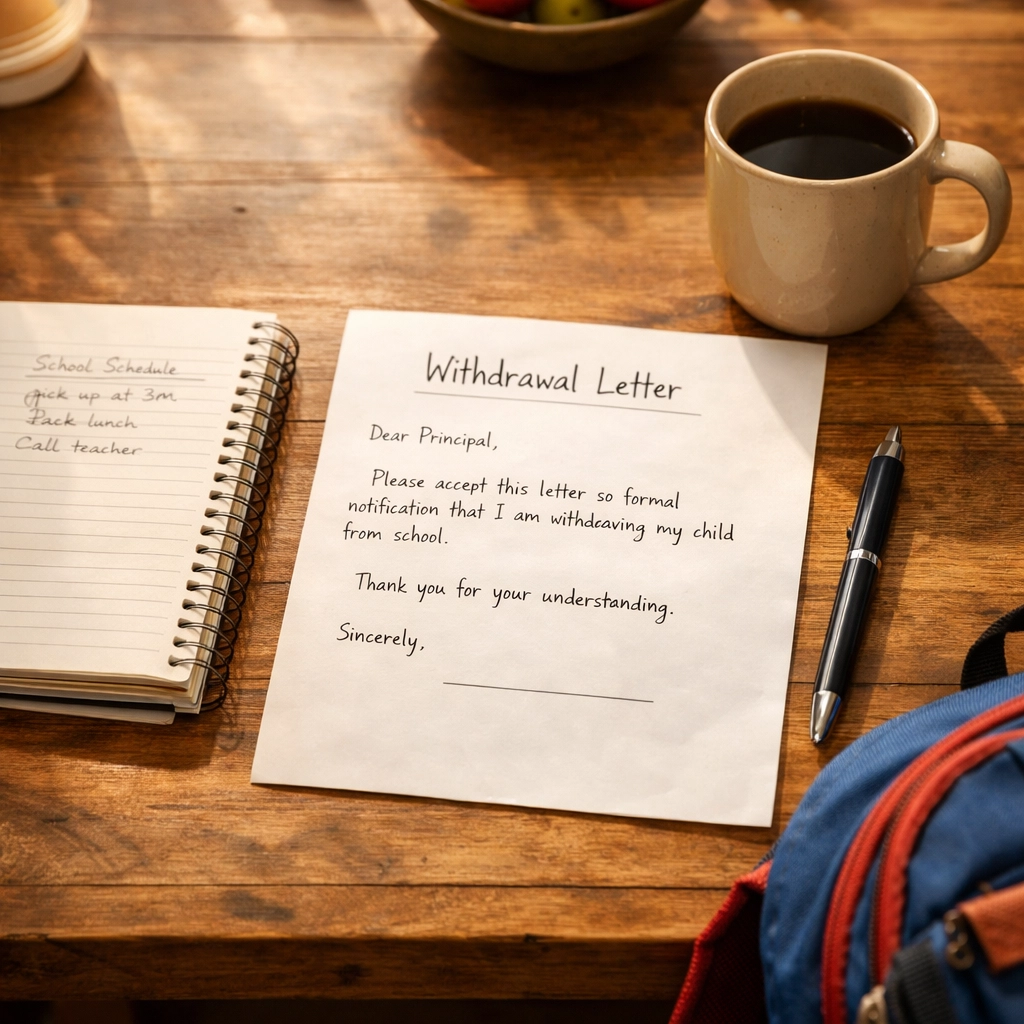
Send your withdrawal letter. This is a simple written notice to your child's current school stating your intent to homeschool and the date you're beginning. You don't need permission or approval, this is notification, not a request. Keep a copy for your records.
Once that letter is sent, you're legally operating a private school in your home. Texas homeschools function as private schools under state law, which means the state imposes minimal oversight. You won't register with any agency, submit to testing requirements, or follow a mandated curriculum structure.
Your legal obligations are genuinely minimal: provide bona fide (genuine, not fraudulent) instruction using a visual curriculum (books, videos, online materials, workbooks) covering five core subjects, reading, spelling, grammar, mathematics, and good citizenship. That's it. No required number of school days. No mandated instructional hours. No standardized assessments.
This freedom is both liberating and disorienting. The constraint isn't legal compliance: it's figuring out what actually works for your family.
Understanding Deschooling: The Hidden First Step
Before you jump into schedules and curriculum, you need to understand a concept that most new homeschool families discover the hard way: deschooling.
Deschooling is the transition period where both parent and child unlearn the assumptions, rhythms, and mental frameworks of traditional schooling. Your child has spent years in a system where learning happens in 45-minute blocks, bells signal transitions, worksheets demonstrate understanding, and sitting still equals being a good student. You've internalized the belief that "real learning" looks a certain way: desks, textbooks, quiet focus, measurable outcomes.
Research on educational transitions suggests that children and families benefit from a decompression period when shifting learning environments. The general guideline often cited in homeschooling communities is one month of deschooling for every year the child spent in traditional school. A third-grader who's been in school since kindergarten might need 3–4 months to fully reset.
This doesn't mean four months of doing nothing. It means four months where you're not trying to replicate school at home. You're reading together. You're having conversations. You're noticing what captures your child's curiosity when there's no curriculum dictating the day. You're letting them sleep until their body naturally wakes. You're watching how they choose to spend unstructured time.
During deschooling, you're also decompressing from your own school-shaped expectations. You're learning that education doesn't require a classroom aesthetic. You're realizing your child can learn math while cooking, develop literacy through comic books, and understand scientific principles by taking apart old electronics.
For your first 30 days in Texas, I recommend a hybrid approach: Handle the essential administrative tasks in days 1–3, then use days 4–14 for active deschooling while you simultaneously observe, plan, and test small rhythms. This isn't fully hands-off, but it's intentionally gentle and exploratory.
Days 4–7: Define Your Real Constraints
Before you build any schedule, you need brutal honesty about your actual capacity. Most new homeschool families fail not because they lack dedication, but because they design systems that ignore their real limitations.
Sit down with paper (not a Pinterest-perfect planner) and write down your genuine constraints:
Time parameters:
- How many hours per day can you realistically dedicate to focused instruction?
- Which days of the week are truly available, accounting for work, other responsibilities, and your own mental capacity?
- What time of day does your household function best? (Morning people vs. night owls matter here.)
Resource parameters:
- What's your actual monthly budget for curriculum, supplies, and enrichment activities?
- Do you have reliable transportation for regular co-op or class commitments?
- What's your screen time philosophy, and is it flexible or firm?
Family parameters:
- How many children are you teaching, and what are their ages?
- Do you have children with learning differences, disabilities, or specific needs that shape scheduling?
- What's your own educational background and confidence level with different subjects?
This inventory isn't pessimistic: it's protective. A modest routine you can sustain beats an ambitious curriculum you'll abandon by October. In Texas homeschooling, where you control the entire schedule and structure, sustainability matters more than impressive plans.
Days 8–14: The Two-Week Discovery Pilot
Rather than purchasing a complete curriculum and committing to a year-long structure, run a two-week pilot program. This is your low-stakes testing phase.
Week 1 structure: Establish a baseline rhythm
Choose one consistent time block each day: morning works well for many families, but afternoon or evening can work if that fits your household better. Keep these sessions short. You're building a habit, not completing a syllabus.
Daily components (30–60 minutes total):
- Reading: Read aloud together or have independent reading time, depending on your child's age and skill level. This can be fiction, nonfiction, graphic novels, or audiobooks. The goal is engagement with text.
- Math: 15–20 minutes of skills practice. This could be a workbook page, an online math game, cooking measurements, or building with blocks for younger learners.
- Writing: 10–15 minutes of any written expression: journal entries, copying a favorite quote, writing a letter, creating a comic strip, or narrating their thoughts while you transcribe for pre-writers.
Twice this week:
- Add a simple science or social studies exploration. This could be a kitchen chemistry experiment, identifying plants on a nature walk, examining a historical photograph, or watching a high-quality documentary together and discussing it.
Once this week:
- Get out of the house for learning. Visit the library, attend a park meetup, try a drop-in museum program, or explore a local historical site.
What you're actually testing: Can you maintain this routine for five days? What time of day worked best? Which activities generated genuine engagement versus compliance? Where did you hit friction points?
Week 2 structure: Refine based on Week 1 data
Adjust the timing, duration, or approach based on what you learned. If mornings were chaotic, shift to afternoon. If math workbooks created power struggles, try a math game or cooking-based approach. If your child lit up during the science exploration but dragged through writing, that's valuable data.
This week, you're testing whether your adjusted rhythm is sustainable and discovering what kind of learning your child naturally gravitates toward when the pressure is lower.
Start Documentation Immediately: Days 8–30
Texas doesn't require you to submit records to anyone, but documentation serves two purposes: it proves you're providing bona fide instruction if ever questioned, and it helps you track actual progress rather than relying on anxious feelings about whether you're "doing enough."
Start simple systems now rather than trying to reconstruct months of learning later.
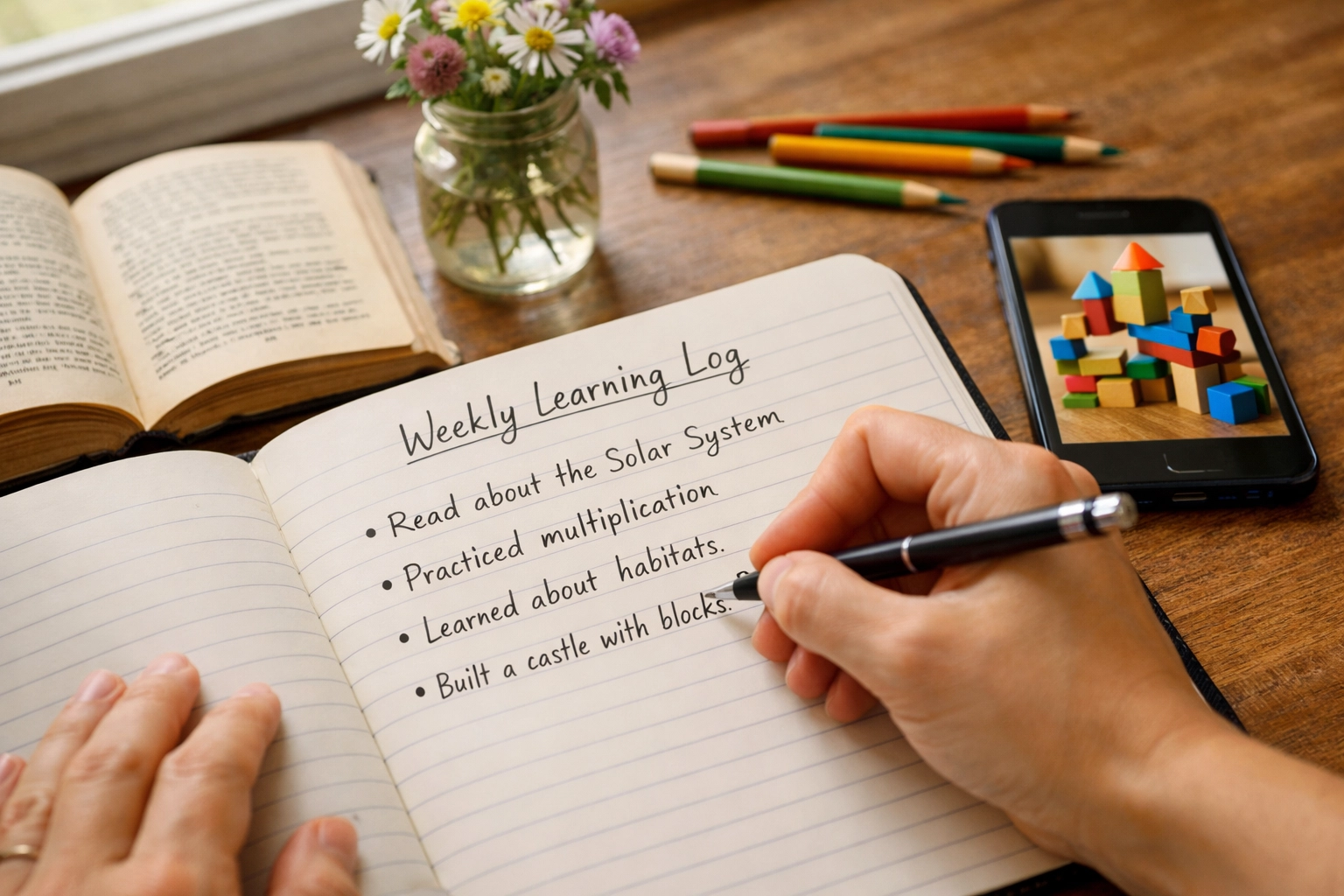
Weekly learning log:
Keep a simple document or notebook where you jot 5–10 bullet points per week describing what you did. This doesn't need to be elaborate. "Read chapters 3–5 of Charlotte's Web, completed two pages of math workbook, kitchen science experiment with baking soda and vinegar, watched documentary about the solar system, wrote in journal three times, park day with homeschool group" is perfectly adequate.
Work samples:
Save a few representative pieces weekly. For hands-on learners, take photos of block structures, science experiments, art projects, or outdoor exploration. For worksheet-based learners, save a page or two from each subject area. Store these in a simple folder or digital album.
Reading list:
Track books read aloud and books your child reads independently. This is easy to maintain and demonstrates substantial learning over time.
Starting these minimal documentation habits during your first 30 days makes record-keeping effortless rather than overwhelming. You're building evidence of genuine, progressive education: which is exactly what Texas law requires.
Days 15–21: Pattern Recognition Phase
By the third week, you should be noticing patterns. This is where you shift from testing to recognizing.
Pay attention to these specific observations:
Energy patterns: When during the day is your child most mentally available? When do you have the most patience and clarity? These biological rhythms matter more than idealized school schedules.
Engagement triggers: Which activities or subjects generate natural curiosity versus resistance? This doesn't mean you only teach what they already love, but it helps you understand where you'll need different approaches.
Struggle points: Where are the consistent friction moments? Is it the subject matter, the time of day, the teaching approach, or something about the specific curriculum material?
Your own capacity: What's your realistic limit for direct instruction time? When do you hit your patience wall? This isn't failure: it's data. Most homeschool families find that 2–4 hours of focused instructional time per day (not including independent work, play, or enrichment activities) is sustainable long-term.
This observation phase is where you start distinguishing between "this approach isn't working" and "we haven't found our rhythm yet." Sometimes the subject is fine but the timing is wrong. Sometimes the timing is right but the curriculum material is mismatched to your child's learning style.
Days 22–30: Strategic Expansion
If your baseline routine from weeks 2–3 is working: meaning you're maintaining it without constant stress and your child is engaged more often than resistant: you're ready for strategic expansion.
Add one community anchor: This is a recurring weekly commitment that provides social interaction and learning outside your home. Options in Texas include:
- Weekly homeschool co-op classes
- Library programs designed for homeschoolers
- Museum education labs or science programs
- Sports teams or martial arts classes
- Music or art lessons
- Faith community programs
Choose one commitment that fits your schedule and budget. Don't overcommit to multiple groups immediately. One consistent community touchpoint is more valuable than three sporadically attended programs.
Add one enrichment option: This is a flexible, non-required learning opportunity you can utilize when it fits. Examples:
- Monthly field trips to historical sites, nature centers, or cultural institutions
- Trial classes or workshops
- Online educational programs or courses
- Project-based learning deep dives when interest strikes
The difference between an anchor and an enrichment option: anchors are commitments you show up for weekly. Enrichment options are available but flexible based on your family's rhythm in any given week.
This gradual expansion model prevents the common new homeschooler mistake of signing up for every available program and burning out by November.

Finding Your Actual Rhythm (Not Pinterest's Version)
By day 30, you should have a working prototype of your homeschool rhythm. This won't be perfect, polished, or Pinterest-worthy. It should be sustainable, genuinely educational, and suited to your specific family.
What a realistic Texas homeschool rhythm often looks like:
Monday–Thursday: Home-based learning blocks (1.5–3 hours of focused work depending on age), plus independent reading, creative play, outdoor time, and life skills learning (cooking, chores, budgeting, etc.)
Friday: Co-op day, park day, or field trip/enrichment day
Weekends: Family time, with occasional educational opportunities woven in naturally (museums, hikes, cultural events, service projects)
This is a "home-first plus weekly community touchpoint" model, and research on homeschool practices suggests this balance works well for many families. You get the flexibility and personalization of home learning with regular social interaction and outside instruction.
What rhythm shouldn't look like in month one:
Seven hours of desk work daily, enrollment in five different co-ops and classes, rigid adherence to a purchased curriculum that's creating constant power struggles, or complete absence of any structure or intentional learning.
The Core Principle: Fit Over Perfection
A workable routine beats a perfect curriculum every single time. In Texas, where you have extraordinary freedom to design your homeschool, this flexibility is both your greatest asset and your biggest temptation. You can build exactly what your family needs: but you have to actually know what your family needs first.
That's what these first 30 days are for: discovery, not demonstration. You're not proving to anyone that you can homeschool. You're figuring out what homeschooling actually means for your specific children in your specific context.
By the end of month one, you should have:
- Handled the minimal legal requirements
- Completed initial deschooling and observation
- Tested and refined a basic daily rhythm
- Started simple documentation systems
- Identified one community connection
- Developed realistic expectations for your capacity and your child's learning patterns
You probably won't have figured out your entire curriculum for the year. You might still be unsure about specific teaching approaches. You'll definitely still have moments of doubt. That's exactly where you should be.
The rhythm you establish in these first 30 days becomes the foundation you'll build on for months and years ahead. Make it genuine, sustainable, and suited to your actual life: not the homeschool life you think you're supposed to be living.
Join the Adventure
Ready to make your Texas homeschool journey more engaging and effective? Tabletop Teaching helps families transform learning through interactive, play-based approaches that work beautifully within Texas's flexible homeschool framework. Explore our free resources designed specifically for homeschool families who want education that feels less like school and more like discovery.
Important Disclaimer: Adult/guardian supervision is required for all educational activities. The information provided in this article is for educational purposes only and does not constitute legal, medical, or professional advice. Homeschooling approaches should be tailored to individual family needs and circumstances. While research supports various educational methods discussed here, outcomes vary by individual. Always consult appropriate professionals for specific legal questions about homeschooling compliance in your jurisdiction.
Tabletop Teaching is not affiliated with, endorsed by, or sponsored by Dungeons & Dragons, Wizards of the Coast, Paizo Publishing, Pathfinder, or any other tabletop role-playing game publisher. All trademarks and copyrights are the property of their respective owners. Any references to specific game systems are for educational and informational purposes only.