Author: 908427pwpadmin

  • Fostering Creativity Through RPGs

    Fostering Creativity Through RPGs

    You’ve probably felt that creative spark when you’re piecing together a character’s backstory or talking your way out of a dragon’s lair. RPGs don’t just entertain—they’re workshops for your imagination, pushing you to think on your feet and collaborate in ways traditional creative outlets can’t match. But what makes these games so effective at unlocking creative potential, and how can you harness that power whether you’re a veteran player or just curious about starting?

    How RPGs Activate Imagination Through Player Choice and Agency

    Because traditional storytelling casts audiences as passive observers, role-playing games revolutionize the creative experience by placing you directly in control of the narrative.

    You create unique characters with distinct attributes and moral alignments, establishing immediate personal investment in the story’s outcome. This agency transforms you from spectator to architect.

    Your creativity flourishes through meaningful player choice. Each decision—whether navigating moral dilemmas or selecting unconventional problem-solving approaches—shapes the plot’s direction.

    You’re not following predetermined paths; you’re forging them. The freedom to leverage your character’s abilities in innovative ways stimulates imaginative thinking.

    You explore different identities and perspectives, experimenting with solutions that reflect your creative vision. This interactive framework doesn’t just entertain—it actively develops your creative capacity through engaged participation.

    Why Character Creation Teaches Self-Expression and Identity Exploration

    When you design a character from scratch—selecting their appearance, personality traits, moral compass, and backstory—you’re engaging in authentic self-expression.

    Character creation provides a safe space where you can explore different facets of your identity without real-world consequences. You might embody a morally ambiguous rogue when you’re typically law-abiding, or create a charismatic leader when you’re naturally reserved.

    This identity exploration encourages critical thinking as you consider how your character’s values influence their decisions. Each choice reveals something about your own perspectives and beliefs.

    Through developing your avatar’s personality and watching them evolve through gameplay, you gain deeper insights into your own potentialities. You’ll discover hidden aspects of yourself while simultaneously developing empathy by inhabiting perspectives vastly different from your own.

    How Collaborative Storytelling Builds Narrative and Communication Skills

    Character creation provides the foundation for self-discovery, but RPGs truly come alive when players collaborate to weave stories together.

    You’ll develop communication skills as you articulate ideas and express emotions during gameplay. When brainstorming story arcs and character dynamics with others, you’re practicing teamwork and creative thinking simultaneously.

    Role-playing different perspectives strengthens your empathy and helps you understand diverse viewpoints. You’ll navigate challenges through collaborative problem-solving, requiring constant interaction and shared decision-making.

    This collaboration naturally improves conflict resolution abilities as you work through disagreements about narrative direction.

    The interactive nature of collaborative storytelling creates lasting social bonds. You’ll connect deeply with fellow players through shared experiences, celebrating victories and overcoming obstacles together while continuously refining your narrative development and interpersonal abilities.

    Problem-Solving in Fantasy Settings That Translate to Real Life

    As you face mysterious puzzles and tactical combat scenarios in fantasy worlds, you’re actually training your brain to tackle real-world challenges with fresh perspective. RPGs demand strategic thinking as you navigate complex situations under pressure, forcing you to analyze problems from multiple angles.

    When your carefully laid plans fail, you’ll learn to adapt quickly—developing resilience that translates directly to professional and personal obstacles.

    The collaborative problem-solving required in these games sharpens your communication skills as you coordinate with teammates to overcome challenges. You’ll discover that the creativity you exercise while exploring unconventional solutions in fantasy settings becomes second nature when approaching real-life dilemmas.

    Each session reinforces a growth mindset, teaching you that failure isn’t final—it’s feedback for improvement.

    When Failure Becomes Feedback: Learning Resilience Through Gameplay

    Your character’s dramatic failure during a critical moment isn’t just entertainment—it’s your brain’s training ground for handling real-world setbacks. RPG mechanics transform failure into valuable feedback, teaching you that mistakes aren’t endpoints but stepping stones toward mastery.

    When your carefully planned strategy crumbles, you’re developing resilience by analyzing what went wrong and formulating new approaches. This process builds genuine adaptability as you learn to pivot strategies mid-session, collaborating with teammates to overcome seemingly impossible challenges.

    Each setback strengthens your perseverance muscles, proving that persistence pays off. You’ll discover that the growth mindset fostered through gameplay—where failure is simply data for improvement—translates directly to real-life situations. Your in-game defeats become powerful teachers, reshaping how you approach obstacles beyond the gaming table.

    How Group Dynamics in RPGs Develop Empathy and Social Intelligence

    Beyond building your own resilience, RPGs transform you into a more empathetic person through the unique social laboratory they create at the gaming table. When you assume different character roles, you’ll experience perspectives vastly different from your own, developing genuine empathy for unfamiliar viewpoints.

    This collaborative storytelling demands effective communication as you navigate complex interpersonal dynamics, sharpening your social intelligence with every session.

    You’ll encounter characters with disabilities and diverse backgrounds, deepening your understanding of social diversity. Through group problem-solving, you’ll appreciate varied approaches to challenges, strengthening your collaboration skills.

    Research confirms that games like Dungeons & Dragons enhance conflict resolution abilities—you’ll learn to negotiate and compromise naturally. These shared experiences don’t just improve gameplay; they’re transforming how you relate to people beyond the table.

    Why Open-Ended Scenarios Encourage Divergent Thinking and Innovation

    When RPG scenarios reject predetermined solutions, they unlock your brain’s capacity for divergent thinking—the ability to generate multiple creative approaches to a single problem. These open-ended scenarios deliberately avoid single correct answers, pushing you to explore multiple outcomes and unconventional strategies.

    You’ll discover your creativity flourishing as you integrate diverse perspectives through collaborative storytelling, co-creating narratives with fellow players.

    The flexible mechanics inherent in RPGs amplify this effect. You’re constantly assessing options, anticipating consequences, and dynamically adjusting your approach to overcome obstacles.

    This continuous innovation strengthens your problem-solving abilities beyond the gaming table. Research confirms that these participatory experiences transfer directly to real-world contexts, teaching you to think beyond traditional limits and apply creative solutions to everyday challenges.

    RPG Mechanics That Remove Creative Barriers for Neurodivergent Players

    While open-ended scenarios spark creativity for many players, neurodivergent individuals often face unique barriers that traditional RPG structures inadvertently create.

    Fortunately, specific RPG mechanics can dismantle these obstacles and unlock creative expression.

    Clear rules and turn-taking systems provide the predictability you need to focus on imagination rather than social anxiety. When you know exactly when it’s your turn to contribute, you’re free to develop ideas without worrying about interrupting others.

    Customizable character creation becomes your canvas for self-expression, letting you explore diverse identities safely.

    Visual aids and maps eliminate confusion, helping you grasp scenarios quickly so creativity flows naturally.

    Accessible design features—simplified language and adaptive components—ensure you won’t feel overwhelmed.

    These mechanics transform RPGs into judgment-free spaces where neurodivergent players thrive creatively alongside everyone else.

    Starting Your First Creative RPG Session: Systems and Setup Tips

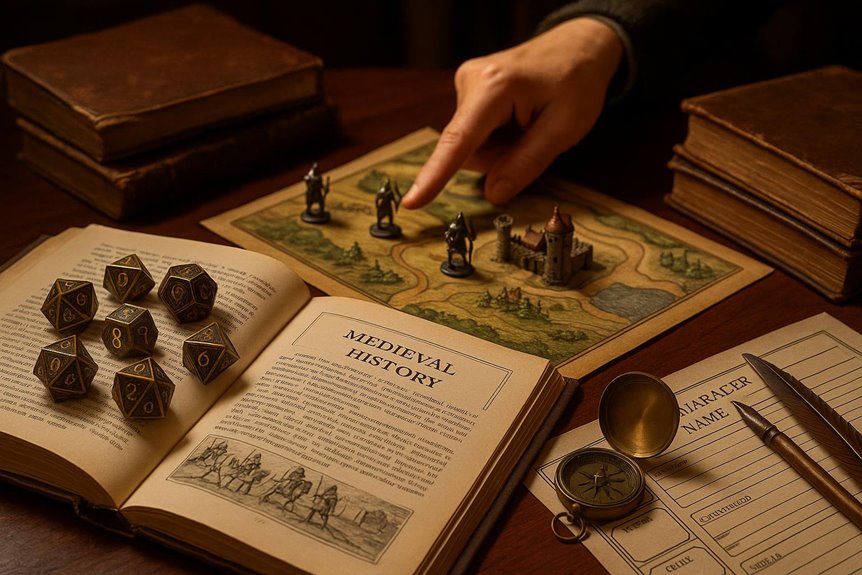
    How do you transform your creative vision into an actual RPG session that runs smoothly? Start with Dungeons & Dragons 5th Edition—its simplified rules and pre-made adventures make it ideal for beginners. Gather polyhedral dice, character sheets, and a GM screen to manage your session effectively.

    Next, outline your world, plot points, and NPCs to immerse players in the narrative. Create a welcoming environment where participants contribute to character creation and story development, fostering genuine collaboration.

    Design challenges that encourage players to think creatively, balancing problem-solving with role-play opportunities. When players engage with games that value their input, they’ll naturally invest in their characters and explore imaginative solutions.

    This collaborative approach transforms your session from a simple game into a dynamic creative experience.

    Frequently Asked Questions

    Can Solo RPG Play Foster Creativity as Effectively as Group Sessions?

    You’ll find solo RPG play can foster creativity just as effectively, though differently. You’re forced to improvise all narrative elements yourself, developing problem-solving and worldbuilding skills that group sessions might distribute among multiple players.

    What Age Is Appropriate to Introduce Children to Role-Playing Games?

    You can introduce children to role-playing games around ages 5-6 with simplified rules and storytelling. By ages 8-10, they’ll handle more complex systems. Start with their interests and adjust complexity based on their individual development and attention span.

    How Much Time per Week Is Needed for Meaningful Creative Development?

    You’ll need about 2-3 hours weekly for meaningful creative development through RPGs. This timeframe allows your child to engage deeply with storytelling, problem-solving, and character development without becoming overwhelming or interfering with other activities.

    Are Digital RPGS as Effective as Tabletop for Fostering Creativity?

    Tabletop RPGs are generally more effective for fostering your creativity. You’ll engage in more spontaneous improvisation, collaborative storytelling, and face-to-face interaction. However, digital RPGs can still develop your creative thinking through character customization and problem-solving.

    Can RPGS Help Adults Rediscover Creativity Lost Since Childhood?

    Yes, you’ll rediscover your creative spark through RPGs. They’ll reconnect you with imaginative play you’ve abandoned since childhood. You’ll improvise stories, solve problems creatively, and explore possibilities without self-judgment, reigniting dormant creative thinking you once enjoyed naturally.

    Conclusion

    You’ve seen how RPGs unlock creativity through character development, collaborative storytelling, and problem-solving that extends beyond the game table. When you embrace player agency and create safe spaces for experimentation, you’re not just rolling dice—you’re building communication skills, empathy, and resilience. Whether you’re neurotypical or neurodivergent, RPGs offer accessible pathways to self-expression and innovation. So gather your friends, choose a system that fits your group, and start your creative journey. Your imagination’s already ready—it’s time to play.

  • Integrating Storytelling Into Curriculum

    Integrating Storytelling Into Curriculum

    You’ve probably noticed that students who zone out during lectures suddenly lean in when you share a story. That shift isn’t random—it’s neurological. Stories activate multiple brain regions simultaneously, creating stronger memory pathways than facts alone ever could. But here’s where most teachers stumble: they treat storytelling as an occasional treat rather than a systematic teaching tool. The difference between those two approaches determines whether your students remember your lessons next month or next year.

    Why Classroom Storytelling Boosts Engagement and Retention

    When teachers weave stories into their lessons, they’re tapping into one of the brain’s most powerful learning mechanisms. You’ll find that storytelling techniques create emotional connections to content, making information stick in students’ minds far better than traditional methods. This approach transforms the learning process by stimulating curiosity and critical thinking, which leads to deeper comprehension of complex topics.

    Your classroom becomes more dynamic when narratives drive engagement. Students participate more actively in discussions, connecting personally with the material.

    When you encourage learners to share their own stories, you’re building community while bridging personal experiences with curriculum content. These relatable story elements don’t just capture attention—they deliver measurable results through higher completion rates and improved academic achievement.

    Three Types of Storytelling Every Teacher Should Know

    How can you harness storytelling’s power most effectively in your classroom? Start with narrative-based instruction, which uses traditional storytelling elements—characters, plot development, climax, and resolution—to convey educational concepts.

    Next, try scenario-based instruction by immersing students in recreated real-world situations that enhance relevance through realistic contexts.

    Finally, implement problem-based instruction, presenting challenges within narrative frameworks that engage students in collaborative problem-solving connected to real-life applications.

    Each approach strengthens retention through relatable plots and strong characters. You can even incorporate digital storytelling to modernize the storytelling process while encouraging students to create their own narratives.

    A well-structured approach bridges complex concepts with meaningful understanding, maintaining interest throughout the learning experience.

    Aligning Story Projects With Your Learning Objectives

    Understanding these storytelling approaches gives you a solid foundation, but their impact multiplies when you connect them directly to your learning objectives.

    Start by identifying specific learning outcomes you want students to achieve, then select storytelling uses that naturally support these goals. When you incorporate storytelling with clearly defined themes, you’ll foster critical thinking while students explore complex concepts.

    Choose diverse modalities—digital narratives, oral presentations, or written stories—to accommodate different learning styles and deepen comprehension. Connect your story projects to real-world contexts, helping students see how academic concepts apply beyond the classroom. This relevance motivates ownership of their learning.

    Regularly reflect on your story selections and their effectiveness, adapting your approach to improve student engagement and outcomes.

    Wonder Journals and Idea Safaris: How Students Find Stories

    Every student has untapped stories waiting to be discovered in their daily lives, yet they often struggle to recognize these narrative gems hiding in plain sight.

    Wonder journals serve as continuous inspiration sources where your students document observations, thoughts, and experiences that generate potential storytelling ideas. Pair these journals with idea safaris—intentional explorations of new environments where students notice unique details sparking creative opportunities.

    Encourage your students to change routines: take different routes to school or explore unfamiliar campus locations for fresh perspectives.

    Regular debriefing sessions after explorations let them share insights and brainstorm collaboratively. This integration emphasizes active engagement and personal investment in storytelling, strengthening students’ connection to your curriculum while developing authentic narratives rooted in their genuine experiences.

    Open-Ended Themes That Spark Original Student Narratives

    When you introduce themes like “In the Shadows” or “Not What You’d Expect” to your classroom, you’re offering students a creative framework without constraining their imagination.

    These open-ended themes activate higher-level thinking, prompting students to forge personal connections with the material while exploring concepts through their unique interpretations.

    You’ll find that storytelling becomes more engaging when students use these flexible prompts to craft narratives.

    The themes provide just enough structure to guide exploration without imposing limitations on their creative expression.

    This approach facilitates meaningful classroom discussions where students reflect on diverse perspectives and experiences.

    Teaching Research Through Student-Led Story Investigations

    How can you transform traditional research assignments into dynamic learning experiences? By empowering students to lead their own story investigations. This approach gives learners ownership of their research, enabling them to connect compelling narratives with their findings while boosting engagement.

    When students analyze story elements—character perspectives, themes, and plot structures—they develop critical thinking skills directly tied to their research topics. Collaborative storytelling sessions further enhance this process through peer feedback and active participation, building community around shared subjects.

    Personal narratives create emotional connections that improve memory retention and make content relatable.

    Empathy Interviews: Gathering Perspectives for Richer Storytelling

    Student-led investigations gain depth when researchers step beyond textbooks and online sources to engage directly with people who hold valuable knowledge and lived experiences.

    Empathy interviews transform your students into active listeners who uncover historical context and personal narratives that textbooks often miss. These conversations challenge existing biases and reveal blind spots in their initial research assumptions. You’ll find students discovering surprising facts that spark deeper reflection and engagement with curriculum topics.

    Through empathy interviews, your classroom storytelling becomes more inclusive and factually accurate.

    Students learn to identify diverse perspectives that resonate with broader audiences. These interviews also build meaningful relationships, connecting personal and communal significance to academic research. Your students won’t just gather information—they’ll understand how individual stories contribute to collective understanding.

    Should You Use Narrative or Scenario-Based Stories?

    Your choice between narrative and scenario-based stories shapes how deeply students connect with curriculum content.

    Narrative storytelling builds emotional engagement through clear protagonists and plots, helping learners retain information through empathy and personal connection. You’ll find this approach particularly effective when you want students to relate emotionally to complex concepts.

    Scenario-based storytelling immerses learners in realistic situations requiring critical thinking and problem-solving. This method emphasizes active participation and practical knowledge application in real-world contexts, fostering collaboration among students.

    Consider using storyboards for both approaches—they’ll provide visual roadmaps guiding learners through educational journeys.

    Ultimately, your decision depends on learning objectives: choose narratives for emotional resonance, scenarios for contextualized problem-solving, or integrate both to maximize engagement and comprehension.

    Digital Storytelling Formats: Video, Audio, and Interactive Options

    While traditional storytelling relies on oral and written traditions, digital formats transform how you deliver educational narratives through technology.

    Video storytelling combines visuals, animations, and sound to enhance emotional resonance and information retention.

    Audio formats like podcasts create intimate engagement through narrative delivery and tone.

    Interactive options, including choose-your-own-adventure and gamified narratives, promote active participation by letting learners shape story outcomes.

    These digital media approaches encourage students to use creativity while developing collaboration and critical thinking skills.

    When you integrate video, audio, and interactive storytelling into your curriculum, you’re providing multiple entry points for diverse learners.

    Students can co-create narratives, making decisions that drive plot development and deepen their understanding of content through immersive, technology-enhanced experiences.

    Storytelling Activities That Build Communication Skills

    Beyond selecting the right digital format, you’ll need specific classroom activities that transform storytelling from a presentation tool into a communication workshop. Digital storytelling projects enable students to integrate writing, speaking, and visual elements simultaneously, strengthening their overall literacy.

    Role-playing historical events through docudramas develops verbal communication while building empathy as students express diverse character perspectives. When students craft original myths or legends, they master narrative structures while weaving in personal or societal values, promoting critical thinking.

    Peer feedback sessions enhance collaboration, teaching students to articulate constructive critiques effectively. Multimedia tools develop technical communication skills as students learn to convey messages through various formats.

    These storytelling activities create authentic opportunities for students to refine communication abilities across multiple dimensions.

    How to Assess Student Stories Without Crushing Creativity

    Assessment becomes a delicate balancing act when you’re evaluating student stories—you need to provide meaningful feedback without dampening creative spark.

    Use clear, flexible rubrics that prioritize creativity and originality while establishing expectations. Focus on core competencies like emotional engagement and theme effectiveness rather than rigid structural adherence.

    Implement peer-assessment practices, allowing students to exchange feedback and reinforce collaborative learning. Encourage self-reflection so students analyze their storytelling processes, fostering ownership of creative choices.

    Most importantly, provide revision opportunities based on feedback. This emphasizes that storytelling is an evolving art form, not a one-time performance.

    When students understand assessment supports their growth rather than judges their stories, they’ll embrace the learning process while maintaining their unique creative voices.

    Frequently Asked Questions

    How Do I Integrate Storytelling in STEM Subjects Like Mathematics?

    You can create word problems with narrative contexts, use historical mathematician stories to introduce concepts, develop character-based scenarios for equations, and frame lessons as mysteries students solve using mathematical reasoning and problem-solving skills.

    What if Students Are Reluctant to Share Personal Stories?

    You can offer alternatives like fictional scenarios, hypothetical characters, or “what if” situations. Let students create stories about imaginary people solving problems, or they’ll retell historical mathematicians’ experiences instead.

    How Much Class Time Should Storytelling Activities Require Weekly?

    You’ll want to dedicate 20-30 minutes weekly to storytelling activities. This duration lets you maintain engagement without overwhelming your curriculum. You can divide this into shorter sessions or one focused period, depending on your students’ needs.

    Can Storytelling Work Effectively With Large Class Sizes?

    Yes, you’ll find storytelling works with large classes when you use strategic techniques. You can employ small group sharing, digital platforms, student pairs, or whole-class interactive storytelling where everyone participates simultaneously.

    How Do I Handle Culturally Sensitive Topics in Student Narratives?

    Establish clear guidelines beforehand, create a safe sharing environment, and allow students to choose their comfort level with disclosure. You’ll need to model respectful listening, address stereotypes immediately, and provide alternative options for private sharing when necessary.

    Conclusion

    You’ve seen how storytelling transforms passive lessons into memorable experiences. By choosing the right format, aligning narratives with your goals, and giving students ownership of their ideas, you’ll create a classroom where curiosity thrives. Don’t let assessment stifle their voices—celebrate the process alongside the product. Start small with wonder journals or a single digital project, then watch as your students become confident storytellers who think critically, collaborate naturally, and connect deeply with every subject you teach.