Tags: Texas, Homeschooling, Guide, Legal, Tabletop Teaching
You’ve made the decision. After months of late-night research, conversations with your partner, and watching your child struggle in a system that wasn’t designed for them, you’re ready to bring education home.
Then the practical question shows up: Okay, but what do I actually do on Thursday morning?
Do you need the district’s permission? Is there a form? Can they say no? What if the office tells you you’re “not allowed” to withdraw mid-year?
In Texas, you don’t need anyone’s approval to homeschool your child. You’re not asking for permission. You’re informing the school that you’re withdrawing your student and taking over their education. That framing matters because it keeps you calm, factual, and hard to derail.
This post is intentionally long. Think of it as a complete Texas Withdrawal Guide you can keep open in one tab while you draft your letter in another. We’ll cover:
- The legal foundation (including a deep dive into the Leeper case and why it still matters)
- The exact step-by-step withdrawal process
- A sample withdrawal letter you can copy/paste and customize
- A first 30 days checklist so you don’t lose momentum after the paperwork is done
- Scripts and tactics for handling school pushback without burning relational bridges
- How to transition into Tabletop Teaching’s style of learning (what it looks like, why it works, and how to start gently)
Disclaimer: This article provides educational information based on publicly available Texas statutes and court opinions and established homeschool advocacy resources. It is not legal advice. For situation-specific guidance, consult the Texas Home School Coalition (THSC) and/or a qualified Texas education attorney.
The Texas Homeschool “Why”: The Law Treats You Like a Private School
Texas is often described as “low regulation” for homeschool. The key idea is simple:
In Texas, a bona fide homeschool is treated as a private school for purposes of compulsory attendance.
That one sentence is why Texas doesn’t have a homeschool “registration” system, annual approval, mandatory state testing, or teacher credential requirements.
But “low regulation” does not mean “no friction.” The most common failure point is administrative: a child is kept home before the school is clearly informed, and the attendance machine rolls forward like it always does.
So we’ll start where Texas homeschool law actually got its backbone: the Leeper litigation.
The Legal Foundation: Leeper v. Arlington ISD (and Why You Keep Hearing About “Bona Fide”)
If you’ve spent more than 20 minutes reading Texas homeschool information online, you’ve probably seen this list:
- reading
- spelling
- grammar
- math
- good citizenship
That list doesn’t come from a modern TEA “homeschool handbook.” It comes from the courts.
The backstory (in plain language)
In the late 1980s and early 1990s, some Texas school districts treated homeschoolers as truants. Parents were threatened with prosecutions for violating compulsory attendance. Families pushed back, and the dispute became a major legal case.
The Texas Supreme Court ultimately addressed whether home schools could qualify as “private schools” under the Texas compulsory attendance law.
What the Texas Supreme Court held (the big takeaway)
The Texas Supreme Court recognized that a bona fide homeschool can be a private school for purposes of compulsory attendance—meaning the child is not truant if they are genuinely being educated at home.
A key opinion is commonly cited as: Texas Education Agency v. Leeper, 893 S.W.2d 432 (Tex. 1994/1995). (You’ll see the year referenced differently depending on source and publication; the reporter citation is the dependable anchor.) Primary text: https://casetext.com/case/texas-educ-agency-v-leeper
The “bona fide curriculum” standard (what it means and what it doesn’t)
Courts used the phrase bona fide to mean “real” or “in good faith,” not a fake setup to dodge attendance laws.
In practice, homeschool advocates summarize Leeper as requiring that a homeschool:
- be bona fide (genuine instruction, not a pretense),
- use a written curriculum, and
- include instruction in reading, spelling, grammar, mathematics, and good citizenship.
Important nuance: the decision is not a curriculum police invite. It’s more like the court saying, “If you’re truly educating your child at home, you fit the private school exemption.”
Why this matters during withdrawal
Most of the time, it doesn’t come up at all. You withdraw, the school codes the student correctly, and everyone moves on.
But if you encounter a school employee who insists you must:
- register with TEA,
- be “approved,”
- show lesson plans,
- submit testing results,
- or meet public school seat-time rules,
then Leeper is part of the reason you can calmly say: “Texas recognizes bona fide homeschools as private schools for compulsory attendance purposes.”
A reality check (because we try not to do legal myth-making here)
- Leeper doesn’t mean schools will never push back; it means you have a strong legal foundation when they do.
- “Written curriculum” doesn’t mean a leather-bound binder. It can be a purchased curriculum, a scope-and-sequence document you wrote, a set of unit plans, or a program outline. The point is that instruction is organized and intentional.
- “Good citizenship” isn’t a specific textbook. It can be integrated through history, civics, community service, discussions, reading biographies, learning to debate respectfully, and participating in group activities.
If you want a short phrase to keep handy: You don’t owe the school proof; you owe your child an education.
Before You Withdraw: What You Need to Know (So Attendance Doesn’t Bite You)
The only administrative requirement in Texas is straightforward:
If your child is currently enrolled in public school, you must withdraw them.
Skipping this step can trigger truancy processes even if your child is learning at home, because the school’s system can only respond to what it can see: absences.

What to gather before you send anything
- Legal guardian status (you are the parent/guardian with authority to withdraw) + photo ID available if needed
- Your child’s current enrollment details (school name, grade, student ID if you have it)
- Key contacts (principal, counselor, attendance clerk/registrar)
- A start date for homeschooling (this becomes your “effective date”)
- A delivery method you can document (email + saved sent copy, and/or certified mail)
If your child has never been enrolled in a public or private school (example: you’re starting kindergarten at home), you generally don’t “withdraw.” You just begin homeschooling.
Step 1: Timing Your Withdrawal (The “Don’t Let This Become Truancy by Accident” Step)
Texas allows withdrawal at any time during the school year. You don’t need to wait for:
- semester breaks,
- the end of a grading period,
- STAAR testing windows,
- or a “district homeschool form.”
The practical rule is the one that keeps families out of avoidable mess:
Withdraw before your child stays home.
If you keep your child out without a withdrawal notice, the attendance system will do what it does: mark absences, trigger letters, escalate.
The safest sequence
- Choose your homeschool start date (often “effective immediately” or a specific date within the next day or two).
- Submit the withdrawal notice in writing.
- Confirm receipt (even a quick “Got it” email is helpful).
- Start homeschool on the date you listed.
Step 2: Drafting Your Withdrawal Letter (Simple, Boring, Effective)
Your letter is a notification, not a negotiation. It does not need:
- your reasons,
- your child’s diagnosis,
- your frustrations,
- screenshots of emails,
- or a philosophical essay about education.
It needs to be clear enough that the registrar can correctly code the student’s status and stop absences.
What to include (the minimum that works)
- Child’s full legal name
- Date of birth (helpful) and/or student ID (helpful)
- Current grade + campus
- A clear statement that you are withdrawing to homeschool
- Effective date
- Parent/guardian name + signature (typed is fine for email; wet signature is fine for mail)
- Your contact info (optional, but usually practical)
Sample withdrawal letter (copy/paste)
Subject: Withdrawal to Homeschool – [Child Full Name], [Grade]
Date: [Month Day, Year]
To: [Principal Name], Principal; [Attendance Clerk Name], Attendance; [Counselor Name], Counselor
[School Name] – [District Name]
[School Address] (optional)Dear [Principal Name],
This letter is to notify you that I am withdrawing my child, [Child’s Full Legal Name] (DOB: [MM/DD/YYYY], Student ID: [if known]), currently enrolled in [Grade] at [School Name], effective [Start Date], in order to begin a bona fide homeschool (private school) program.
Please update your records to reflect that [Child’s Full Name] has been withdrawn and will be educated at home.
I am requesting a copy of my child’s educational records, including the most recent report card/transcript, attendance record, and any applicable assessment records (including STAAR scores if available).
Thank you,
[Parent/Guardian Full Name]
[Phone] (optional)
[Email] (optional)
[Address] (optional)
Notes:
- The phrase “bona fide homeschool (private school)” is optional, but it can help if you’re dealing with a school that’s confused about the legal category.
- You can request records here, or in a separate email. Either way is fine.

Step 3: Submitting Your Withdrawal (Document Everything Without Being Dramatic About It)
Texas law doesn’t mandate a specific delivery method. Your goal is to create a clean paper trail.
Option A: Email (fast + timestamped)
Email your letter to:
- principal,
- attendance clerk/registrar,
- counselor (optional but helpful).
Then:
- save the sent email as PDF (or screenshot),
- save any reply,
- and keep it in a “Homeschool Admin” folder.
Option B: Certified mail (classic proof)
Mail your signed letter via certified mail with return receipt requested. Keep:
- a copy of the letter,
- the receipt,
- the return signature.
“Belt and suspenders” approach
Some families email and send certified mail. Not required, but it can reduce stress if you anticipate pushback.
Step 4: Requesting School Records (Because Future-You Will Thank You)
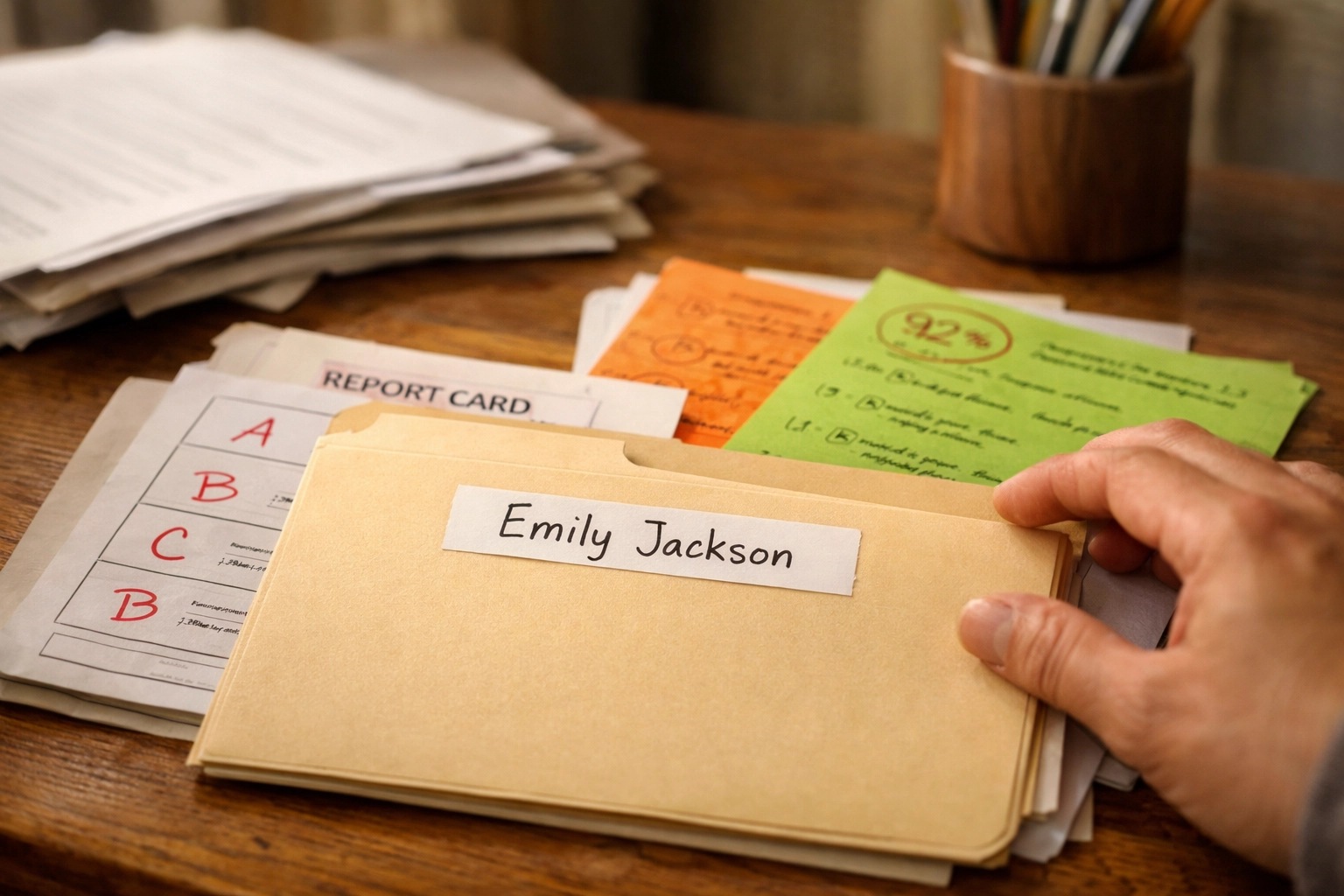
Before the last day, request copies of academic documents. Schools usually can provide these quickly, but it varies.
Request:
- report cards or transcripts
- attendance records
- STAAR scores (if applicable/available)
- Home Language Survey (HLS) + language proficiency documentation (if applicable)
- IEP documentation (if applicable)
- 504 documentation (if applicable)
- GT records (if applicable)
- evaluations (academic/behavioral)
Tiny but important tip
When you request records, do it in writing. Phone calls are fine for logistics, but written requests are easier to track.
Step 5: Starting Homeschool (What “Bona Fide” Looks Like on a Normal Tuesday)
Once your withdrawal is effective, keep your child home and begin instruction.
Texas does not mandate:
- specific subjects beyond the Leeper list for bona fide homeschool recognition,
- instructional hours,
- curriculum provider,
- or standardized tests.
The guiding standard is that instruction is genuine and consistent—again, “bona fide.”
A workable “bona fide” baseline (not legal advice, just practical)
If you want something concrete (because ambiguity is stressful), many families do well with:
- a simple weekly rhythm (4–5 days)
- reading instruction and/or reading time most days
- math practice most days
- writing practice several times a week
- a “good citizenship” thread (history/civics, discussion, community involvement)
And yes: your homeschool can still be fun. “Bona fide” does not mean “joyless.”
Checklist: The First 30 Days After Withdrawal (So You Don’t Lose the Thread)
The first month is where families either:
- stabilize and build confidence, or
- spin out in a cloud of “Should we be doing more? Should we be doing less?”
Here’s a checklist built for reality: limited time, stressed nervous system, and a kid who may need to decompress.
Day 0–3: Admin + decompression
- Send withdrawal notice (email and/or certified mail)
- Confirm the school received it (save the reply)
- Ask for records in writing (if you didn’t include it in the letter)
- Create a simple homeschool folder (digital or paper) for:
- withdrawal letter,
- proof of delivery,
- records requests,
- any responses
- Plan a decompression window (even 2–5 days) if your child is burnt out
Observation (not a universal claim): many kids need a short “I’m not being graded” breath before they can engage again.
Days 4–10: Set your minimum viable homeschool
- Pick a “start time” that’s humane (example: 9:30 instead of 7:10)
- Choose a math resource and a reading plan you can actually sustain
- Decide what “written curriculum” means in your home:
- purchased curriculum, or
- a one-page plan listing resources and topics
- Set up a simple tracking method (notes app, planner, or a single spreadsheet)
- Identify your “good citizenship” plan:
- read-alouds with discussion,
- history timeline,
- local volunteer day,
- library programs,
- co-op etiquette norms
Days 11–20: Assess without panicking
- Do a gentle baseline:
- read aloud and listen,
- do a short math placement check,
- write a paragraph together,
- talk through what feels hard
- Notice learning friction:
- Is it content difficulty?
- Is it attention?
- Is it anxiety tied to school?
- Adjust pacing
Most studies on learning suggest retrieval practice helps retention compared to rereading alone, but kids also need psychological safety to participate. (Retrieval practice is well-supported in cognitive psychology; see Roediger & Karpicke, 2006.)
Days 21–30: Build rhythm + community
- Choose one “outside the home” learning anchor:
- library club,
- homeschool park day,
- co-op,
- nature group,
- tabletop club (yes, this can count as “good citizenship” practice when it’s structured)
- Write a one-page “what we’re doing” summary for your own records
- Start a portfolio habit (optional, but helpful):
- photos of projects,
- writing samples,
- reading list,
- math progress snapshots
Handling Pushback From Schools (Without Getting Pulled Into a Debate Club You Didn’t Join)
Most withdrawals are boring. That’s the goal.
But sometimes schools push back—usually because:
- the staff member is following a script designed for transfers, not homeschool, or
- they’re worried about compliance, or
- they’ve been told outdated information.
Your job is to stay calm, stay factual, and keep everything in writing.
Pushback: “You must come in person to sign forms.”
Response (email):
Thanks for the note. I have provided written notice of withdrawal to homeschool effective [date]. Please confirm my child’s enrollment status has been updated accordingly. I’m happy to communicate by email for documentation.
In-person is optional. Some families prefer in-person for speed; others prefer written documentation. Either way, your written notice is the core.
Pushback: “You can’t withdraw until the end of the semester / after testing / after paperwork.”
Response:
We are withdrawing effective [date] to begin homeschooling. Please update records accordingly and confirm withdrawal.
You don’t need to argue. Just restate the action and request confirmation.
Pushback: “We need your curriculum.”
Response:
Texas does not require homeschool families to submit curriculum plans to the district. We are providing bona fide instruction at home effective [date]. Please confirm withdrawal.
If someone persists, you can loop in THSC. (If you’re time constrained, that’s the moment to outsource the fight.)
Pushback: “If you homeschool, you have to use our online program.”
Response:
We are withdrawing from enrollment and will be homeschooling privately. We are not enrolling in a district program.
Sometimes districts offer “homebound” or “remote” programs; those are not the same as independent homeschooling. If you want independent homeschool protections, be clear that you are withdrawing from enrollment.
Pushback: “You’ll be reported to truancy.”
Two steps:
- Do not panic.
- Reply in writing with proof you withdrew.
On [date], I provided written notice withdrawing [Child Name] effective [date] for homeschooling. Please see attached copy. Please confirm the attendance coding has been updated and absences will no longer be recorded.
If needed, contact THSC or an attorney.
Transitioning to Tabletop Teaching’s Style of Learning (Without Turning Your House Into a Constant ‘Game Night’)
A lot of families start homeschooling with a good curriculum… and then daily friction shows up.
The child resists because the work feels abstract. The parent resists because nobody wants to spend limited relational capital on constant battles. Then “learning” starts to feel like tension instead of confidence.
Tabletop Teaching is designed to break that loop by adding a curriculum layer we call the Tabletop Teaching Playbook: short tabletop scenes that wrap required learning objectives inside meaningful choices.
This isn’t about “tricking” kids into learning. It’s about designing the learning moment so it has three things that often go missing:
- a reason to care (context),
- a reason to speak/decide (retrieval),
- a reason to revisit later (spacing).
The evidence-based mechanics (plain language)
1) Retrieval practice
When your child has to pull an answer from memory (instead of re-reading it), learning tends to stick better. This is a well-studied effect in cognitive psychology. (For example: Roediger & Karpicke, 2006, on the testing effect.)
In a tabletop scene, retrieval often happens naturally:
- “What does that word mean?”
- “How many supplies can we buy with 18 coins?”
- “Which evidence supports your claim?”
2) Spaced repetition / spaced revisit
When an idea comes back later in a new situation, memory tends to be more durable than when everything is practiced in one block. (Spacing effects are widely documented; see Cepeda et al., 2006.)
Tabletop scenes are good at this because the same skill can show up in different contexts:
- fractions while trading,
- fractions while cooking,
- fractions while dividing treasure.
3) Motivation that doesn’t rely entirely on compliance
A well-run tabletop activity supports:
- autonomy (meaningful choice),
- competence (visible progress),
- relatedness (team belonging).
Those three needs are central in Self-Determination Theory (Deci & Ryan), and while motivation research is complex, many families report that these elements reduce daily conflict.
“Okay, but how do I start this in the first month?”
Start small and keep it boringly consistent.
Week 1: One scene, one objective
Pick one academic objective you already want:
- math facts,
- reading comprehension,
- writing a clear sentence,
- using evidence in an argument.
Run a 15–25 minute scene where the objective is required to move forward.
Example (math, grades 2–6):
- The party needs to buy supplies.
- They have a budget.
- They must calculate totals and make tradeoffs.
You’re not “adding” math. You’re relocating math into a decision.
Week 2: Add a notebook habit (your “written curriculum” backbone)
Keep a simple “Adventure Log”:
- date,
- scene title,
- what objective you practiced,
- one sample problem or writing snippet.
This creates:
- a record of instruction,
- a portfolio artifact,
- and a structure that helps you plan the next scene.
Week 3: Build a spacing loop
Bring back the same objective in a different context.
- Week 1: budgeting supplies
- Week 3: splitting loot fairly
Same math, new situation.
Week 4: Invite your child into co-design (without letting them run the whole show)
Ask two questions:
- “What kind of story do you want next—mystery, exploration, or town building?”
- “What should our character be good at?”
Then you map your objectives onto that.
What this looks like across the Leeper subjects
If you’re thinking “cool, but does this cover the Texas basics?” here’s a practical mapping:
- Reading: reading clues, manuals, letters, maps, short passages; read-alouds with questions
- Spelling/Grammar: writing notes to NPCs, making quest posters, editing “mission reports”
- Math: resource tracking, measurement, probability, time, budgeting, mapping
- Good citizenship: cooperative play norms, conflict resolution, community problem-solving, civics/history themes
This isn’t the only way to homeschool. It’s one way to make the daily work feel less abstract and more human.
After Withdrawal: What Happens Next (And What You Don’t Need to Do)
Once withdrawn, the school should code your child as withdrawn (often “withdrawn to homeschool”) and stop absences.
You generally won’t receive:
- report cards,
- standardized testing schedules,
- school communications.
If you move to another Texas district, you don’t “re-withdraw.” Your child is simply not enrolled.
If you move out of state, pause and re-check that state’s homeschool requirements. They vary a lot.

Building Your Homeschool Foundation (The Part That Actually Changes Your Daily Life)
Withdrawal is the administrative step. The home rhythm is the real project.
If you want a calm starting principle, here’s a good one:
Choose systems you can run on a tired Tuesday.
That’s the quiet advantage of Tabletop Teaching’s approach: you’re not trying to generate motivation from scratch every day. You’re using a structure that makes retrieval, spaced revisit, and meaningful choice more likely to happen.
If you want practical guides, encounter templates, and a community of families doing this in real life, Join the Adventure.
References (for the legal and learning science claims)
- Texas Education Agency v. Leeper, 893 S.W.2d 432 (Tex. 1994/1995). Primary text: https://casetext.com/case/texas-educ-agency-v-leeper
- Roediger, H. L., & Karpicke, J. D. (2006). Test-enhanced learning: Taking memory tests improves long-term retention. Psychological Science.
- Cepeda, N. J., Pashler, H., Vul, E., Wixted, J. T., & Rohrer, D. (2006). Distributed practice in verbal recall tasks: A review and quantitative synthesis. Psychological Bulletin.
Important Disclaimer: Adult/guardian supervision is required for all Tabletop Teaching activities and resources. The information provided in this article is for educational purposes only and does not constitute legal, medical, or professional advice. Tabletop Teaching content is designed to support learning and engagement but is not a substitute for professional consultation when needed. Individual results may vary. Always verify current Texas Education Agency requirements and consult qualified legal or educational professionals for specific guidance related to your family's situation.