
Texas Education Freedom Account (TEFA) 2026: Texas ESA Guide to Private School, Homeschooling Options, and Microschools
A practical 2026 guide to the Texas Education Freedom Account (TEFA)—Texas’s new Texas ESA. Compare private school, homeschooling options, and microschools, plus funding amounts, lottery selection, and official TEA/Comptroller resources.
TL;DR
Read time: 8 minutes
Texas's new Education Freedom Account (TEFA) program launches February 4, 2026, offering families up to $10,474 for private school or $2,000 for homeschool expenses. This post breaks down the mechanical reality of the policy, compares public/private/home/hybrid options with expanded pros and cons, and provides official resources for families considering a transition. No single path is "correct": this is a need-based, family-specific decision. A follow-up article will cover the application process step-by-step.
Key takeaways:
- Application Window: Opens Feb. 4, 2026, closes March 17, 2026
- Not First-Come, First-Served: If applications exceed funding, selection is handled by lottery (with statutory prioritization categories)
- Funding Amount: $10,474 per student annually for private school; $2,000 annually for homeschool; up to $30,000 for special education
- Initial Funding Available: July 1, 2026 (distributed in phases)
- Usage: Tuition, uniforms, textbooks, tutoring, transportation, therapies
Read on to understand the compliance trade-offs and audit your family's friction points before applying.
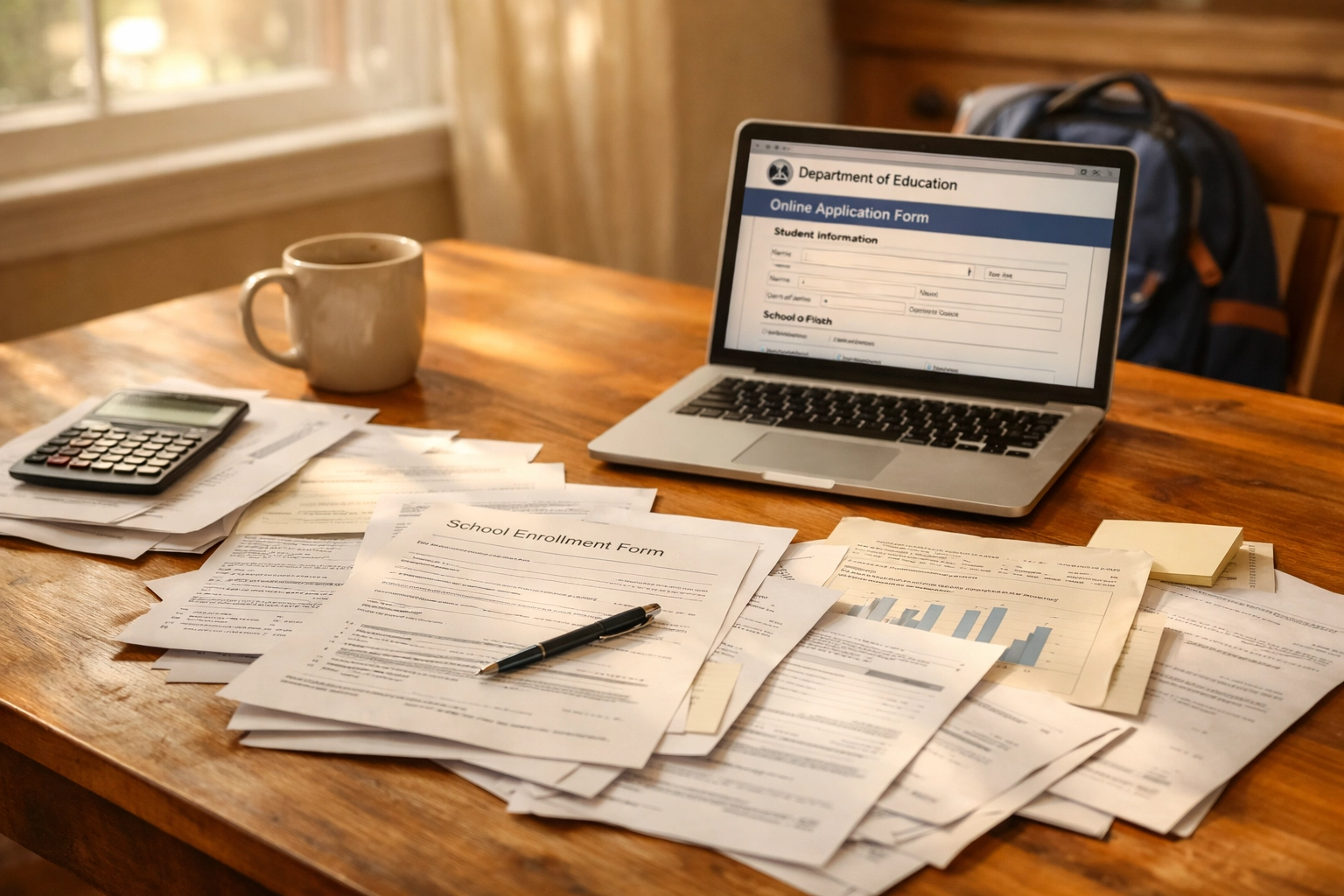
Last week, the Texas Comptroller's office confirmed that applications for the Texas Education Freedom Account (TEFA) program (a Texas ESA) will officially open on February 4, 2026: three days from now. For the thousands of families currently sitting at their kitchen tables weighing the "Big Choice": public, private, homeschooling options, or something in between: the headline sounds like a clean win: a share of $1 billion in taxpayer funding to customize their child's education.
But a policy is only as good as its implementation on a normal Tuesday. Before you download the application checklist, let's translate the legislative high-ground into household reality.
Texas Education Freedom Account (TEFA) Mechanics: What SB 2 Changes for Texas ESA Families
The 89th Texas Legislature passed Texas Senate Bill 2 (SB 2) text — Texas Education Freedom Account (TEFA) in 2025, establishing universal Education Savings Accounts (ESAs), often referred to as a Texas ESA. Mechanically, this shifts the state's role from funding systems to funding students.
Evidence Note (What we know):
- Funding Tiers: Students attending approved private schools may receive $10,474 per year (85% of the statewide average state and local funding per student). Homeschoolers: those not enrolled in a private "umbrella" program: are eligible for a smaller allotment of $2,000 annually.[1]
- Prioritization: The program is "universal" in theory, but "prioritized" in practice. Students with disabilities can receive up to $30,000 for special education services if the child has an IEP on file with TEA by the end of the application period; the specific amount is based on what the district would receive for services.[2]
- The Compliance Hook: To receive funds, families must use approved providers and curriculum. In Texas, where homeschooling has historically enjoyed a "hands-off" legal status (thanks to the 1994 Leeper v. Arlington ISD decision), this creates new mechanical friction: financial support in exchange for state-vetted spending.[3]
The application deadline is March 17, 2026. Families will be notified of their award status beginning in early April 2026. Funds become available in phases: at least 25% by July 1, 2026; at least 50% by October 1, 2026; and any remaining balance by April 1, 2027.[4]
Early estimates suggest the program will serve approximately 50,000 to 100,000 students during its first year: fewer than 2% of Texas school-aged children.[5]
The State vs. Table Lens
Texas is often called the "Wild West" of homeschooling because we have no mandatory testing or portfolio reviews. However, the TEFA program introduces a "Table Lens" challenge. Even if the funding covers your math manipulatives and specialized reading curriculum, the administrative load: tracking receipts, managing an online portal, and ensuring every purchase fits the "approved" bucket: is a new job description for the parent.
If you are a family that values absolute autonomy, the subsidy might feel like an expensive gift. If you are a family struggling to afford specialized dyslexia therapy, it's a vital bridge.
In an upcoming article, we'll walk through the specific mechanics of applying for the $2,000 TEFA homeschool subsidy (Texas ESA), including what counts as an "approved educational expense" and how to navigate the Texas Comptroller TEFA portal without losing your mind.
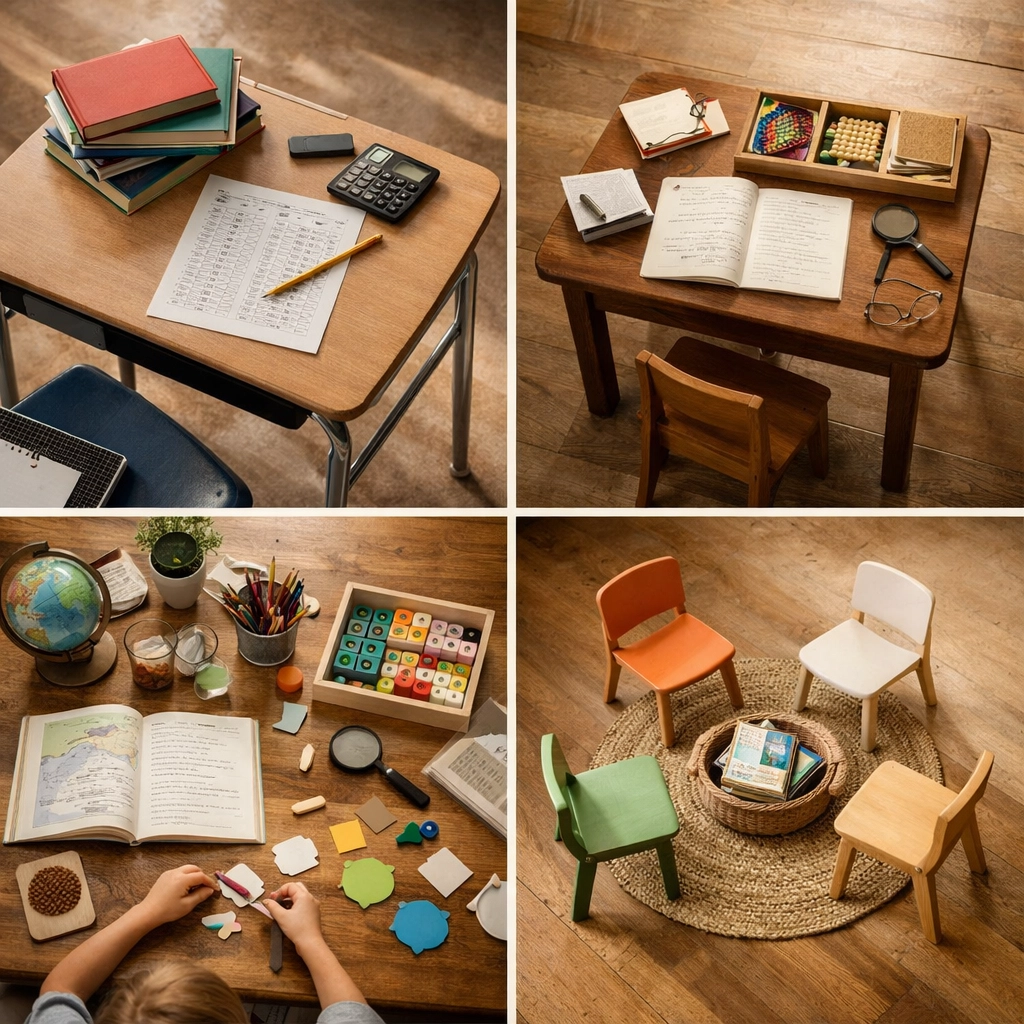
Texas Education Freedom Account (TEFA) Homeschooling Options: Public vs Private vs Home vs Microschool Curriculum
This decision is deeply individualized. There is no "correct" choice, only the one that fits your child's needs and your family's capacity on a normal week.
Public School
Pros:
- Zero direct tuition cost (tax-funded)
- Access to specialized facilities (science labs, athletic fields, theater programs)
- Mandated special education services under IDEA
- Built-in social exposure with proximity-based peer groups
- Structured daily routine (external accountability)
- No curriculum planning required by parents
- Transportation often provided via district busing
- Access to extracurricular activities (band, debate, sports teams)
Cons:
- Large class sizes (often 25–30+ students per teacher)
- Limited curriculum flexibility (state-mandated scope and sequence)
- Pacing designed for the middle of the bell curve
- High-stakes testing pressure (STAAR assessments)
- Exposure to peer behaviors parents may not endorse
- Rigid daily schedule (early start times, inflexible lunch/recess)
- Teacher turnover and burnout can affect consistency
- Limited ability to customize for learning differences outside IEP accommodations
Private School
Pros:
- Smaller class sizes (often 12–18 students)
- Mission-aligned values and community culture
- More flexibility in curriculum choices and teaching methods
- Often stronger arts, language, or faith-based programs
- Access to TEFA funding (up to $10,474 per year)
- Selective admissions can create more focused peer groups
- Typically more responsive communication with families
- Often better teacher-to-student ratios for individualized attention
Cons:
- Tuition costs still range from $10,000–$30,000+ annually (TEFA covers a portion)
- Geographic limitations (not available in all areas)
- Admission requirements and application processes
- Still follows a traditional classroom structure
- May not accommodate significant learning differences without additional support
- Limited special education services compared to public schools
- Less regulated accountability (parent must vet quality)
- Transportation usually not provided
Homeschooling
Pros:
- Complete control over curriculum, pacing, and philosophy
- Flexible daily schedule (accommodate work schedules, travel, health needs)
- One-on-one or small sibling-group instruction
- Ability to customize for neurodivergence, giftedness, or learning disabilities
- No standardized testing requirements in Texas
- Access to TEFA funding (up to $2,000 per year for approved expenses)
- Freedom to integrate hands-on, project-based, or narrative-driven learning
- No peer pressure or bullying concerns
- Ability to take "field trips" or integrate real-world learning on off-peak days
Cons:
- High parental time commitment (you are teacher, principal, and lunch coordinator)
- Social opportunities require intentional planning (co-ops, sports leagues, church groups)
- Curriculum costs ($500–$3,000+ annually, depending on approach)
- No built-in accountability or external validation
- Requires strong organizational and teaching skills
- Income trade-off (one parent often reduces work hours)
- Limited access to specialized equipment (science labs, art studios)
- Potential isolation for both parent and child if not actively mitigated
- TEFA subsidy requires compliance with approved vendor lists (reduces curriculum autonomy)
Microschools and Hybrid Models
Pros:
- Small, multi-age learning pods (often 5–15 students)
- Flexible schedules (2–3 days per week in-person, rest at home)
- Strong community feel with like-minded families
- Often project-based or Montessori-inspired pedagogy
- Lower tuition than traditional private schools ($3,000–$8,000 annually)
- Parents share teaching responsibilities or hire a lead educator
- Hybrid models allow parents to work part-time while still homeschooling
- Often more responsive to individual student needs
Cons:
- Limited availability (primarily in urban/suburban areas)
- Regulatory gray zone (some microschools operate as private schools, others as co-ops)
- Quality varies widely (no standardized oversight)
- May not qualify for TEFA funding depending on structure
- Sustainability depends on committed parent group
- Limited extracurricular options compared to traditional schools
- Tuition still required even with part-time models
- No guarantee of long-term stability (programs can dissolve if families leave)
TEFA (Texas ESA) Friction Points: What the Texas Education Freedom Account Assumes at Home
Even if the TEFA program delivers exactly what it promises, the implementation assumes several conditions that not all families possess:
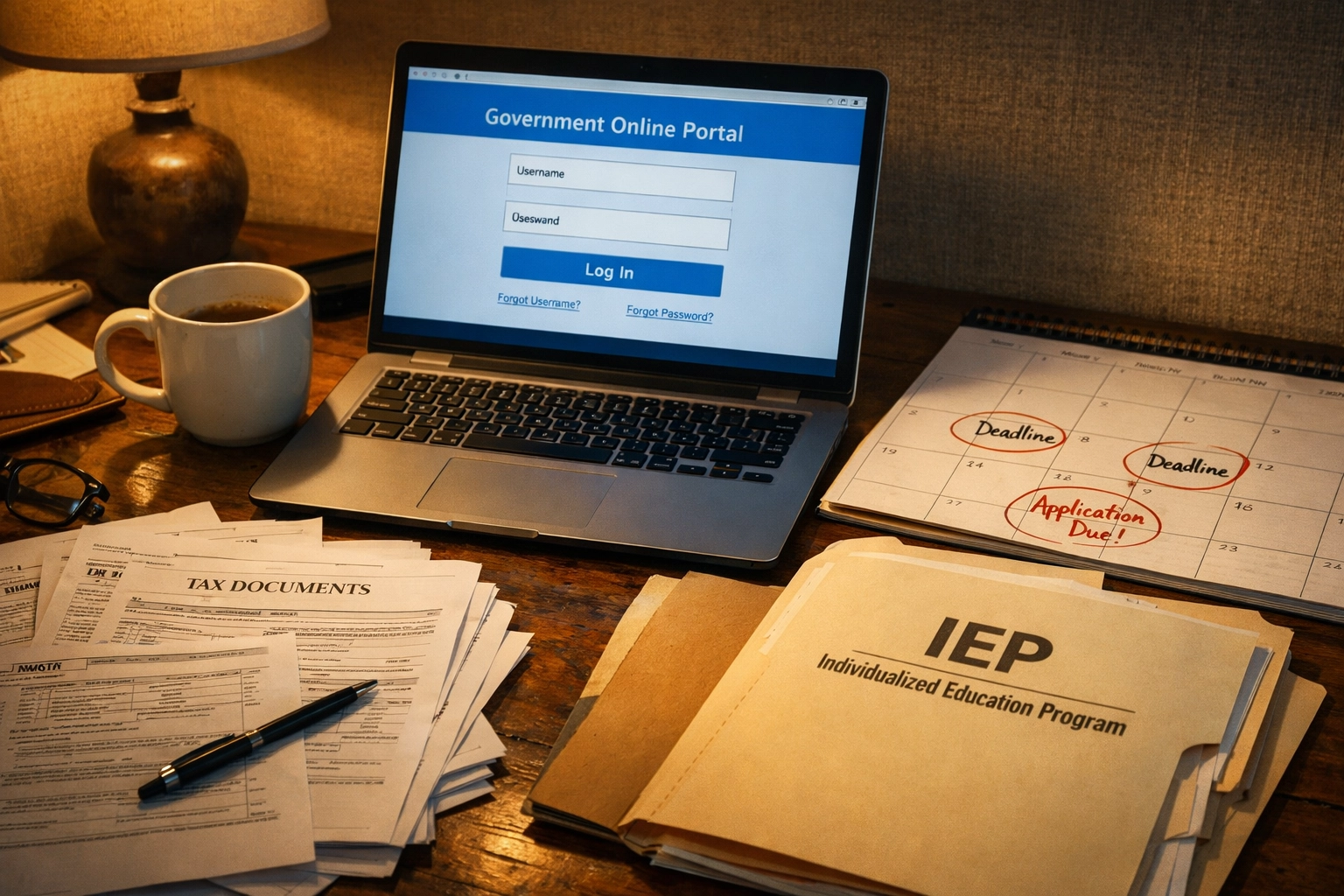
Digital fluency. The application, reimbursement tracking, and vendor approval systems are all online. If you're not comfortable navigating government portals, the $2,000 subsidy costs you time.
Upfront capital. Because funding arrives in phases, families may still need to float costs that land before deposits (or exceed early deposits).
Approved vendors. Not all curriculum or therapy providers are pre-approved. If your preferred dyslexia tutor doesn't meet the state's criteria, you're either switching providers or forfeiting the subsidy.
Stable housing. Families experiencing housing instability may struggle to maintain the documentation required for reimbursement.
These aren't moral failures. They're design constraints that make the policy more accessible to some families than others.
TEFA (Texas ESA) Awards: How the Texas Education Freedom Account Lottery and Prioritization Work
This is not a first-come, first-served system. If eligible applicants exceed available program funding, selection is handled by lottery, with statutory prioritization as follows:
Year 1 (2026-27 school year):
- Children with a disability who are members of a household whose total annual income is at or below 500% of the Federal Poverty Level
- Children who are members of a household whose total annual income is at or below 200% of the Federal Poverty Level
- Children who are members of a household whose total annual income is between 200% and 500% of the Federal Poverty Level
- Children who are members of a household whose total annual income is at or above 500% of the Federal Poverty Level (funds capped at 20% of total budget; priority given to students enrolled in Texas public/charter schools for at least 90% of the prior year)
Year 2 and beyond:
Applicants are first prioritized by:
- Siblings of participating children
- New eligible program applicants
- Prior program participants who ceased participation due to enrollment in a public or charter school
Then within each group, the Year 1 income-based prioritization applies.
Important notes:
- If a child is accepted during an application period, any eligible sibling who applies during the same period is also accepted.
- Participants who remain in good standing do not need to reapply each year.
- For prioritization purposes, "children with a disability" includes both children with an IEP on file with the Texas Education Agency and children who submit a program-approved proof-of-disability form. However, only those with an IEP on file are eligible for the increased $30,000 funding amount.
Texas Education Freedom Account (TEFA) Resources for Homeschooling Options and Texas School Choice
If you are considering a move, do not guess. Use the official "terrain maps":
- Texas Education Freedom Account (TEFA) official program site — application + school locator (Texas ESA): Your source for the February 4th application and the "School Locator" tool.
- Texas Home School Coalition (THSC) — Texas school choice and homeschool legal guidance: The gold standard for legal defense and understanding how a Texas ESA may affect your Leeper freedoms.
- Texas Comptroller — TEFA / Texas ESA FAQ on approved educational expenses: A dry but necessary read on what counts as an "approved educational expense."
We'll cover the step-by-step application process in our next article, including how to gather the required documentation and navigate the reimbursement timeline.
Your Next 3 Steps
- Audit the Friction: Ask yourself if your current school tension is a financial problem or a design problem. Funding fixes the former; curriculum shifts fix the latter.
- Mark February 4: If you plan to apply for TEFA, gather your 2025 tax returns and your child's birth certificate now. The application deadline is March 17, 2026.
- Define Your Non-Negotiables: Before looking at the money, list three things your child must have to learn effectively (e.g., quiet, movement, small-group collaboration). Then choose the arena that honors those needs.
Disclosure / If you need help
If you’re looking for bookkeeping support for your homeschool or microschool, feel free to reach out. My wife specializes in bookkeeping for homeschool families and micro bakeries.
Closing: The table comes first. At the end of the day, TEFA is not a magic wand—it’s a tool. It can lower the cost of private school, subsidize part of a homeschool budget, or help fund therapies and tutoring that were previously out of reach. But it also introduces paperwork and guardrails, and that trade-off will feel very different depending on your family’s capacity on a normal Tuesday. If you’re already stretched thin, the best choice might be the simplest one—even if it’s not the one with the biggest dollar figure attached. If you’re considering homeschooling in Texas specifically, the legal on-ramp is simpler than most people assume: Texas does not register homeschoolers, and the state does not approve or monitor homeschool programs. If a child is being taught at home, Texas treats that as meeting compulsory attendance the same way private school does. Practically, the baseline expectations are that your instruction is bona fide (not a sham), your curriculum is in a visual form, and you cover reading, spelling, grammar, math, and good citizenship. So the “how do I become a homeschool family?” version usually looks like this: choose a start date, pick a simple curriculum spine you can actually sustain, and if you’re withdrawing from public school, provide a brief written notice/letter of assurance and keep a copy for your records. Then focus on rhythm before rigor: a workable weekly routine, a place to keep samples/receipts/notes, and one or two social anchors (co-op day, park day, youth group, sports—whatever fits your people). And if you’re trying to make the leap with TEFA in mind, treat the application like a household project, not a political event. The family application window opens February 4, 2026 (at 9 a.m.) and closes March 17, 2026, and it is not first-come, first-served. If demand exceeds funding, selection is handled by lottery with prioritization categories set by law. Funding notifications begin in early April, and deposits arrive in phases beginning July 1. That means your best move right now is to get “Tuesday-ready”: decide what you would actually buy or pay for first, check whether those vendors/services fit within TEFA’s approved-expense system, and plan your cash flow around the phased deposit schedule. If you do that prep work, TEFA becomes what it should be—support—rather than a new part-time job you didn’t ask for. If you want the shortest version: don’t let the money decide for you. Let your child’s needs and your family’s real capacity choose the arena—and then use TEFA (or skip it) in a way that protects the home you’re trying to build.
References:
[1] Texas Comptroller of Public Accounts. Texas Education Freedom Accounts (TEFA) Rules and Allotments. Accessed February 1, 2026.
[2] Texas Legislature. Senate Bill 2, 89th Texas Legislature (2025).
[3] Jennings J. School Choice in Texas: Protecting Homeschool Freedom. Texas Home School Coalition. January 2026. Accessed February 1, 2026.