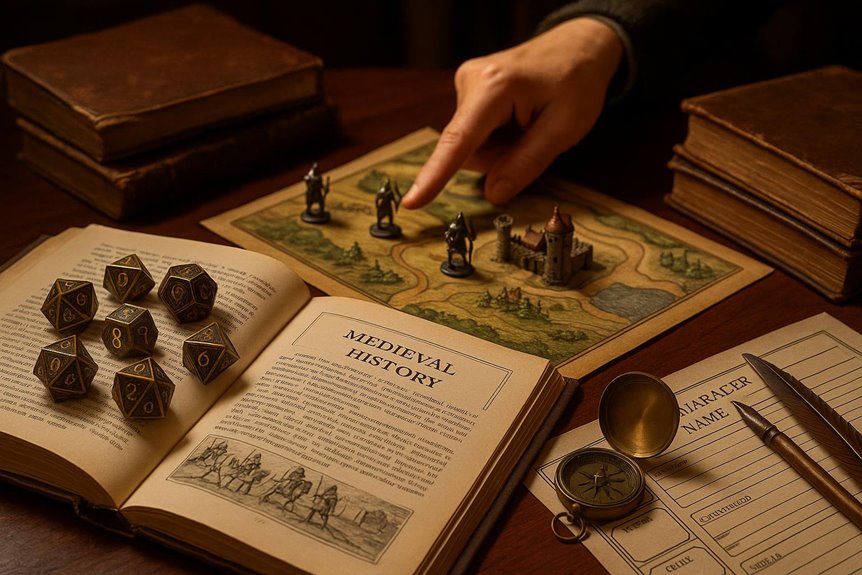
You’ve probably watched students zone out during another lecture about the Constitutional Convention or the Industrial Revolution. Their eyes glaze over, phones emerge, and you wonder if anything’s actually sinking in. But what if your classroom transformed into a space where students didn’t just memorize dates—they lived them? Role-playing games offer something textbooks can’t: the chance for learners to inhabit history’s pivotal moments, make impossible choices, and discover why people acted as they did.
Why RPGs Make History Stick for Students
When students step into the shoes of a historical figure, they don’t just memorize dates and facts—they experience history from the inside out. This immersive approach transforms passive history lessons into active explorations where you’re making decisions based on your character’s beliefs and motivations.
Research confirms what teachers observe: students who participate in educational RPGs retain historical content better than through traditional methods. You’re not simply reading about events—you’re navigating complex scenarios that demand critical thinking and problem-solving.
The collaborative nature of RPGs creates dynamic learning environments where you’ll communicate with classmates, debate perspectives, and explore social and political contexts together.
This emotional engagement builds empathy while making historical narratives personally relatable and genuinely memorable.
Tabletop vs. Digital vs. Live-Action: Pick Your RPG Format
As you design your history RPG curriculum, you’ll face a crucial decision: which format best serves your educational goals?
Tabletop RPGs excel at promoting verbal communication and deep narrative exploration, making them ideal for social studies discussions requiring critical analysis. Digital RPGs offer technological integration and online accessibility, reaching wider audiences while incorporating multimedia elements that bring historical periods to life.
Live-action RPGs provide physical engagement and real-time decision-making, creating memorable experiential learning moments that make history tangible.
Consider your classroom resources and student needs. Tabletop formats require minimal equipment but demand strong facilitation skills. Digital platforms need technology access yet enable asynchronous participation. Live-action RPGs demand physical space and preparation time but deliver unmatched immersive experiences.
Each format strengthens different learning outcomes in history education.
Stage a Historical Debate Using Character Roles
Historical debates transform your classroom into a time machine where students embody the passionate voices of figures who shaped our world. When you assign character roles from pivotal moments in your history curriculum, students don’t just memorize facts—they defend positions using historical evidence and contextual knowledge.
This active learning strategy works because students must genuinely understand their character’s motivations and conflicts. Whether you’re staging debates about civil rights or the founding of nations, role-playing encourages critical thinking through multiple perspectives.
Students examine key issues while defending viewpoints they might personally oppose. The result? Enhanced engagement and retention.
Your students stop being passive receivers of information and become active participants in historical dialogue, developing analytical skills that extend beyond memorizing dates.
Design RPG Scenarios That Build Critical Thinking
Beyond staging debates, you can take role-playing further by crafting full RPG scenarios where students navigate branching historical situations.
History teachers who design these scenarios enable students to explore complex decision-making by evaluating consequences of each choice during gameplay. You’ll sharpen their analytical capabilities when students engage with causal relationships and recognize how individual actions impact broader historical outcomes.
Incorporate diverse character roles that encourage analyzing historical contexts from varying viewpoints, fostering empathy and deeper comprehension.
Facilitate group collaboration to promote dialogue, helping students synthesize different interpretations and develop evidence-based arguments. These immersive learning environments break traditional classroom barriers, motivating active participation in historical inquiry.
Students connect with material personally, transforming passive learning into dynamic exploration of pivotal historical moments.
Cast Students as Historical Figures They’ll Remember
When you assign students specific historical figures to embody, you transform abstract names in textbooks into living, breathing personas they’ll remember long after the lesson ends. This character-driven approach deepens retention because students don’t just memorize facts—they experience perspectives firsthand.
When embodying figures from the Civil Rights movement, for example, students grapple with real dilemmas these leaders faced, fostering empathy and emotional connections to the past. This immersive method activates critical thinking as students navigate complex scenarios from their character’s viewpoint.
Research confirms the impact: 94% of students report increased motivation in active learning environments. By stepping into historical roles, they’ll explore foundational debates and connect past struggles to contemporary social justice issues, making history personally relevant and unforgettable.
Use AI Chatbots to Interview Historical Characters
AI chatbots transform history classrooms into interactive interview studios where students become investigative journalists questioning figures from the past.
You can use platforms like Hello History or ChatGPT to facilitate these dynamic conversations, prompting students to ask historical characters about their motivations, decisions, and perspectives during pivotal events.
This approach encourages critical thinking as students analyze responses for accuracy against primary sources.
They’ll evaluate whether the AI-generated answers align with historical evidence, developing crucial research skills in the process.
Weave Primary Sources Into Your RPG Scenarios
Primary sources become powerful game mechanics when you embed letters, photographs, and official documents directly into your RPG scenarios.
You’ll transform historical evidence into plot drivers where players must interpret real documents to advance the narrative. This approach creates inquiry-based learning experiences that require critical thinking and problem-solving using authentic data.
When players analyze primary sources within your game, they’ll engage in meaningful discussions about historical perspectives and decisions.
You’re essentially placing them in the shoes of historical figures, forcing them to confront the same moral and ethical dilemmas faced during those events. This method builds empathy while providing genuine historical context that deepens understanding of the era you’re teaching, making abstract dates and facts tangible and memorable.
Connect RPG Stories to Students’ Family Histories
Everyone carries untold stories from their family’s past, and these narratives become extraordinary teaching tools when you integrate them into your RPG campaigns. Encourage students to bring artifacts or stories from their families to enrich game scenarios. They’ll explore their ancestors’ experiences within historical contexts, creating characters based on actual family histories. This approach deepens empathy as students role-play through challenges their forebears faced.
Have students develop family trees to visualize lineage and connect personal heritage to broader historical themes. Assign interviews with relatives to gather oral histories, then weave these accounts into RPG storytelling.
This method strengthens both historical engagement and family bonds while making abstract historical events tangible and personally meaningful through the lens of family histories.
Handle Shy Students and Time Limits in RPG Lessons
How do you create space for quiet voices while keeping your RPG lessons moving forward? Start with small group discussions before your main session, letting shy students rehearse their contributions among trusted peers.
Assign specific roles that match their interests—perhaps a code-breaker analyzing World War documents or a civilian witness sharing observations. This targeted approach encourages participation without overwhelming them.
Use structured formats where students contribute at predetermined points in the storyline. Set clear time limits for each segment to maintain momentum and reduce anxiety about when to speak.
Emphasize that every contribution matters, creating psychological safety where shy students feel valued. When exploring complex topics like World War history, these deliberate strategies ensure all voices enrich your collaborative narrative.
Grade Role-Play Without Killing the Engagement
When you attach traditional grades to role-play activities, you risk transforming creative exploration into performative box-checking.
Instead, design your lesson plans around formative assessment that values process over perfection. Focus on evaluating students’ understanding of historical contexts, their ability to articulate their character’s beliefs, and their engagement with historical dilemmas.
Use rubrics that reward risk-taking and thoughtful decision-making rather than theatrical performance. Consider peer feedback sessions where students assess each other’s historical accuracy and perspective-taking.
You can also implement self-reflection journals where learners explain their character’s motivations and decisions. This approach maintains the immersive storytelling that enhances retention while providing meaningful assessment data.
Teach Controversial History Safely Through Role-Play
Role-playing games create psychological distance that transforms taboo topics into teachable moments. When history is far removed through character adoption, your students can explore controversial events without personal defensiveness.
They’ll inhabit historical figures’ perspectives, debating decisions that shaped pivotal moments while developing critical thinking skills. Design character-based scenarios around moral dilemmas—slave owners confronting abolitionists, suffragettes challenging traditionalists, or soldiers questioning wartime orders. Your students won’t just memorize dates; they’ll analyze motivations behind contentious choices.
This approach fosters empathy for marginalized voices often silenced in traditional textbooks.
You’re creating a classroom where difficult histories receive open discussion, equipping students to recognize how past injustices connect to present-day issues. Role-play transforms potentially divisive topics into opportunities for respectful discourse and deeper understanding.
Frequently Asked Questions
What Is the Best Way to Teach History?
You’ll teach history most effectively by immersing students in role-playing experiences where they embody historical figures, analyze primary sources, and explore multiple perspectives through interactive methods that transform passive learning into engaging, meaningful discovery.
What Are the 5 C’s of History?
The 5 C’s of History are Causation, Corroboration, Context, Change Over Time, and Complexity. You’ll use these essential frameworks to analyze historical events, verify sources, understand circumstances, track societal evolution, and recognize nuanced relationships throughout history.
What Are the 7 Basic Concepts of History?
You’ll study seven basic concepts: Cause and Effect, Continuity and Change, Historical Significance, Perspectives, Empathy, Time, and Historical Evidence. These concepts help you analyze events, understand multiple viewpoints, and interpret sources critically.
What Are the 5 R’s of Historical Significance?
The 5 R’s of historical significance are Relevance, Remembering, Resonance, Results, and Relationships. You’ll use these criteria to evaluate why certain events, people, or developments matter in understanding history and its impact on today’s world.
Conclusion
You’ve seen how RPGs transform passive history lessons into unforgettable experiences. Whether you’re staging debates, casting students as historical figures, or connecting past events to personal stories, you’re giving your students something textbooks can’t—the chance to live history. Start small, embrace the messiness, and watch your classroom come alive. Your students won’t just learn history anymore; they’ll feel it, question it, and carry it forward.