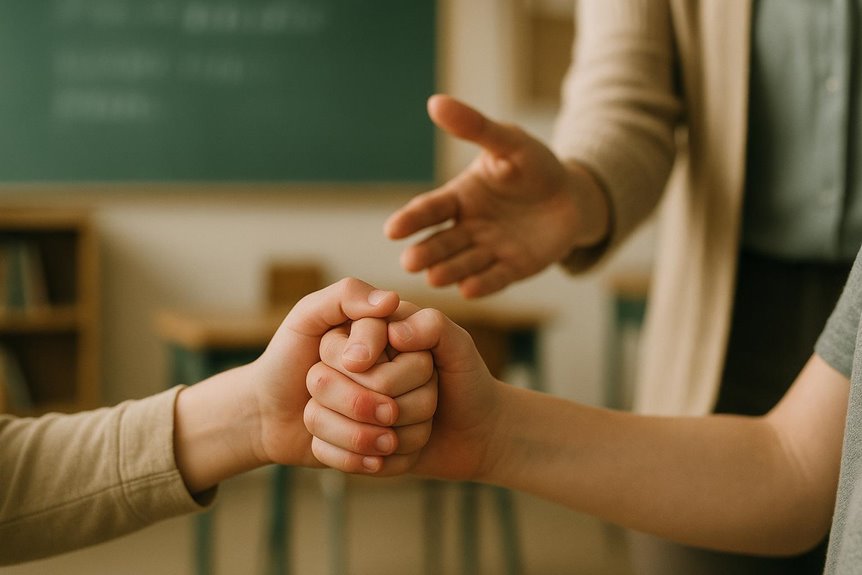
You’ve probably noticed how quickly small disagreements between children can escalate into full-blown meltdowns. What if you could equip your kids with the tools to navigate these moments before they spiral? Teaching empathy and conflict resolution isn’t just about keeping the peace—it’s about building essential life skills that’ll shape how your children connect with others for years to come. The strategies you choose today will determine whether conflicts become learning opportunities or recurring battles.
How Empathy Prevents Conflicts Between Children
When children develop empathy, they’re better equipped to prevent conflicts before they escalate. By understanding the feelings of their peers, students recognize emotions that might otherwise lead to misunderstandings. This awareness creates a foundation for conflict prevention and helps students navigate disagreements constructively.
Teaching empathy builds emotional intelligence, enabling children to view situations from multiple perspectives before reacting. When you teach students these skills, they’re more likely to engage in pro-social behavior rather than aggressive responses. Research shows empathy training can reduce conflicts by up to 30%.
Children who practice empathy develop positive social relationships and demonstrate less bullying behavior. As they learn to discuss feelings openly, they help students resolve disputes through dialogue instead of escalation, creating harmonious peer interactions.
Model Empathy in Your Daily Interactions
Your daily actions speak louder than any lesson plan when teaching empathy to students. When you model empathy through active listening and acknowledging a child’s feelings, you help teach essential emotional skills.
Share your personal experiences to help students understand how a person’s emotions work in real situations. Ask questions that encourage reflection: “How would you feel in their position?” This approach reinforces positive things about considering others’ perspectives.
Incorporate real-life examples during discussions, connecting abstract concepts to practical scenarios. When showing empathy becomes routine, students recognize its value in their relationships.
Create opportunities to practice empathy daily through reflective questioning about how actions affect others. Your consistent demonstration proves that understanding and caring for others isn’t optional—it’s a fundamental life skill worth cultivating every day.
Simple Empathy-Building Activities for Any Age
Simple activities can transform abstract empathy concepts into tangible skills that stick with students throughout their lives. Role-playing scenarios help children practice understanding different perspectives and finding ways to resolve conflicts effectively.
“Walk the Line” activities create powerful emotional connections as participants physically express their experiences. Emotion charades strengthens your students’ ability to recognize feelings through non-verbal cues, building essential empathy skills.
Story-sharing sessions using literature encourage discussions about characters’ emotions, helping children relate to diverse experiences. When you consistently recognize kind acts, you reinforce empathetic behaviors and create positive environments.
These straightforward activities work across all age groups, making empathy development accessible and engaging. By implementing these practical exercises regularly, you’ll cultivate lasting emotional intelligence and conflict resolution abilities.
Teach Active Listening to Resolve Disagreements
Because conflicts often escalate when people talk past each other rather than truly listening, teaching active listening becomes one of your most powerful tools for helping students resolve disagreements.
You’ll teach empathy by introducing the HEAR strategy—Halt, Engage, Anticipate, Replay—which builds essential social skills through focused attention and reflection. Active listening strengthens conflict resolution by helping students understand the feelings of others beyond just their words.
Encourage them to observe body language and emotional context during disagreements. When you prioritize this communication approach, students feel genuinely valued and understood.
Research confirms active listening reduces misunderstandings and promotes empathetic responses. By practicing these techniques consistently, you’ll create an environment where constructive dialogue flourishes, transforming how students navigate conflicts and deepening their understanding of different perspectives.
Practice Conflict Resolution Through Role-Playing Scenarios
When students step into someone else’s shoes through role-playing, they’ll discover conflict resolution strategies that stick far better than passive instruction.
Role-playing scenarios create safe spaces where you can help children actively experience conflicts, building empathy as they understand different perspectives.
Through these exercises, students develop crucial communication skills by articulating their feelings and negotiating solutions effectively.
You’ll enhance their problem-solving skills when they visualize and rehearse various approaches to disagreements.
Choose age-appropriate scenarios that resonate with students’ real experiences to maximize engagement and learning.
After each role-play, facilitate debriefing discussions where participants reflect on their actions and emotions.
These conversations reinforce lessons and deepen understanding of how everyone involved experienced the conflict.
Use Stories to Help Kids Understand Different Perspectives
While role-playing gives students hands-on practice with conflict resolution, stories offer a powerful complement by opening windows into countless perspectives beyond their immediate experiences. When you read books like “The True Story of the Three Little Pigs,” you help children understand how narratives shift based on viewpoint.
Stories featuring diverse characters, such as “The Invisible Boy,” create opportunities to discuss feelings and personal connections. These strategies for teaching combine storytelling with role-playing exercises where kids embody different characters, deepening their ability to show empathy.
After each reading session, facilitate discussions about character motivations and emotions. This approach strengthens perspective-taking skills essential for conflict resolution. By consistently using one story after another, you’ll cultivate children’s capacity to recognize and respect multiple viewpoints in real-life situations.
What to Do When Your Child Struggles With Empathy?
If your child seems disconnected from others’ feelings, recognize that empathy develops at different rates for each child. You’ll need patience while teaching empathy to children who struggle with perspective-taking.
Start by modeling empathetic behavior in your daily interactions—kids learn best through observation.
Create structured opportunities to help them understand others’ feelings. Role-playing exercises provide an opportunity to build empathetic responses in safe scenarios. Show students how to identify emotions by discussing characters’ experiences in books and movies.
Encourage your child to express their emotions regularly through conversations and active listening. This practice helps create connections between their feelings and others’.
Frequently Asked Questions
How Can I Teach Someone Empathy?
You can teach empathy by modeling compassionate behavior, discussing emotions openly, reading stories with diverse perspectives, practicing active listening techniques like HEAR, and role-playing scenarios where they respond to others’ feelings with understanding.
What Are the 7 Keys of Empathy?
The 7 Keys of Empathy you’ll want to master are: perspective-taking, recognizing emotions, emotional understanding, communicating empathy, practicing kindness, staying nonjudgmental, and developing emotional resilience. Each strengthens your connections with others.
What Are the 5 Key Elements of Empathy?
You’ll recognize the five key elements of empathy as: recognizing emotions in yourself and others, understanding others’ emotional experiences, expressing compassion, communicating your desire to help, and taking supportive action.
What Are the 4 Principles of Empathy?
You’ll find empathy’s four principles are emotional understanding, perspective-taking, responding with care and concern, and maintaining an open mindset. These principles help you connect authentically with others, validate their feelings, and build stronger relationships through genuine understanding.
Conclusion
You’ve now got practical tools to nurture empathy and conflict resolution in your children. Remember, you’re their most powerful role model—when you consistently demonstrate empathy in your daily interactions, they’ll naturally follow your lead. Start with simple activities that fit your family’s routine, practice active listening together, and don’t get discouraged if progress seems slow. With patience and persistence, you’ll watch your children develop the emotional intelligence they need to build stronger, healthier relationships.